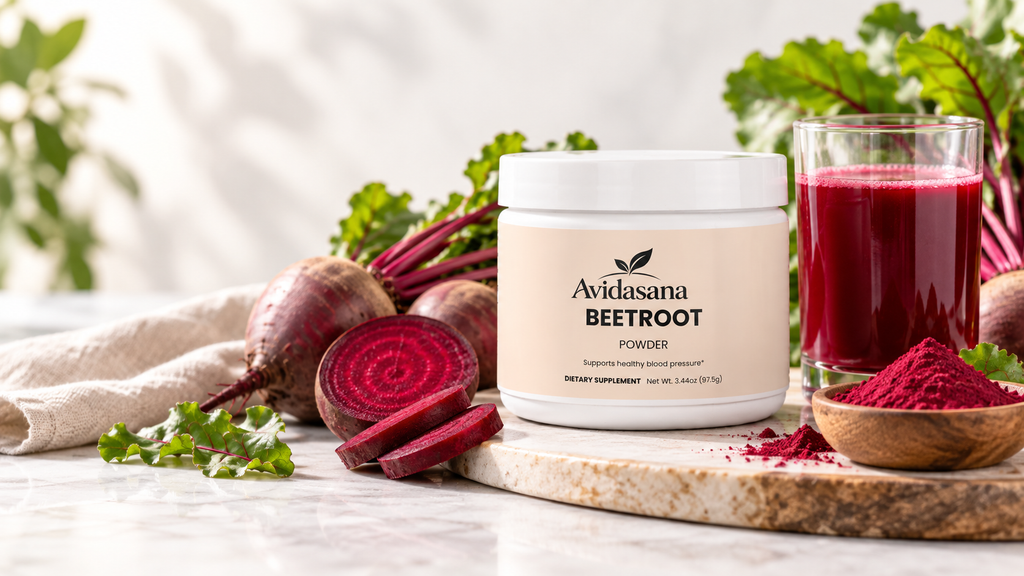
You probably remember beets as the red vegetable sitting quietly in the corner of the dinner plate.
They were hardly considered exciting.
Nobody finished a plate of beets and announced, “I can feel my nitric oxide rising.”
Yet over the past several years, beetroot has attracted serious attention from researchers studying circulation, exercise performance, blood pressure and healthy aging.
And there is an interesting reason why.
Beetroot is naturally rich in dietary nitrates. Inside the body, those nitrates can be converted through a series of steps into nitric oxide, a molecule involved in blood-vessel function and blood flow.
That has made beetroot especially interesting for adults who want to remain active as they get older.
But before we turn a vegetable into Superman wearing a red cape, we need to separate what science actually tells us from what supplement advertising sometimes promises.
Beetroot is not a miracle cure.
It does not replace exercise.
It does not replace a healthy diet.
And it certainly does not replace medication prescribed by your physician.
What it may offer is something much more realistic: another nutritional tool that can fit into an overall healthy-aging lifestyle.
Why Nitric Oxide Matters
Nitric oxide sounds like something you would find in a chemistry laboratory.
Actually, your body produces it naturally.
Among its many roles, nitric oxide helps blood vessels relax and widen. This process can support healthy blood flow and the delivery of oxygen and nutrients throughout the body.
The challenge is that nitric oxide availability can be affected by age and health.
That is one reason researchers have become interested in dietary nitrates from foods including beets and leafy green vegetables.
When you consume nitrate, some of it is converted to nitrite by bacteria in your mouth. It can then undergo further conversion into nitric oxide in the body.
That entire pathway has become an important area of nutritional research.
A 2026 scientific review of beetroot juice research described beetroot as a concentrated source of dietary nitrate and noted that research has found potentially useful effects involving vascular function and exercise performance, although individual responses vary considerably.
That last part deserves emphasis:
People don’t all respond the same way.
Nutrition rarely works like flipping a switch.
What About Blood Pressure?
This may be the reason many people first hear about beetroot.
Because nitric oxide helps blood vessels relax, researchers have investigated whether nitrate-rich beetroot could support healthy blood pressure.
There is evidence suggesting that beetroot-derived dietary nitrate can produce modest improvements in cardiovascular measurements in some people.
Research specifically involving older adults, however, has produced mixed results.
A systematic review examining nitrate-rich foods in older adults found that several studies reported improvements in blood pressure or blood flow while others found no significant improvement. The researchers concluded that the evidence showed potential benefits but that additional high-quality research was needed.
That is an excellent example of how responsible supplement discussions should work.
We shouldn’t translate:
“Some studies show a benefit”
into:
“Beetroot lowers your blood pressure.”
Those are two very different statements.
If you have high blood pressure, beetroot powder should not become your homemade substitute for medical treatment.
Think of nutrition as part of your health strategy—not a replacement for healthcare.
Beetroot and Exercise: This Is Where Things Get Interesting
One of the strongest areas of beetroot research involves physical performance.
Dietary nitrate may help the body perform certain types of exercise more efficiently.
Researchers have found that nitrate supplementation can reduce the amount of oxygen required during some forms of submaximal exercise.
In plain English?
Your body may be able to perform certain physical activities while using oxygen a little more efficiently.
A large systematic review and meta-analysis involving 123 studies found a small overall improvement in exercise performance from dietary nitrate, particularly when nitrate came from beetroot juice or nitrate-rich foods.
A newer analysis has also reported a small improvement in maximal or peak oxygen uptake among healthy adults consuming beetroot juice.
Notice the word small.
That word matters.
If somebody tells you beetroot powder will transform you from sitting on the sofa Monday into running the Boston Marathon Sunday, keep your sneakers in the closet.
But small improvements can still be meaningful.
Especially as we age.
For Seniors, Performance Doesn’t Mean Winning a Race
The supplement industry often talks about “performance” as though everyone is training for the Olympics.
Most of us have a different definition after 60.
Performance might mean:
Walking another half mile.
Finishing 30 minutes on the treadmill.
Riding your bicycle.
Playing 18 holes of golf.
Dancing for another song.
Gardening without getting exhausted.
Keeping up with your grandchildren.
Walking through an airport without wondering why Gate 27 appears to be located in another state.
For an older adult, physical performance is closely connected with something far more valuable than athletic glory:
independence.
The longer we can walk, exercise, climb stairs, carry groceries and move confidently, the longer we may be able to continue living life on our own terms.
That’s why nutritional research involving muscle function, circulation and exercise capacity deserves our attention.
Not because we’re trying to become younger.
Because we’re trying to remain capable.
What Does Research Show Specifically in Older Adults?
Scientists have looked at nitrate supplementation in older populations because nitric oxide availability tends to decline with aging.
A systematic review of controlled trials involving older adults found some evidence of improved physical performance following nitrate-rich supplementation, particularly on measures such as time to exhaustion.
However, results involving cardiovascular health, cognition and metabolism were less consistent.
That’s another useful reality check.
Beetroot isn’t everything.
It shouldn’t be.
No single food or supplement should have that job.
Healthy aging is built from many pieces:
Movement.
Strength.
Sleep.
Nutrition.
Social connection.
Healthy body weight.
Blood-pressure management.
Medication management.
Hearing.
Mental activity.
Preventive healthcare.
And yes, perhaps useful supplements where the evidence and an individual’s needs make sense.
The pieces work together.
Beetroot Contains More Than Nitrate
Beetroot’s story isn’t limited to nitrate.
Beets also contain plant compounds including betalains and polyphenols.
Betalains are the pigments responsible for that unmistakable deep red-purple color.
Researchers continue to examine whether these and other beet compounds contribute antioxidant or other biological effects separate from nitrate.
A 2024 scientific review raised an interesting possibility: some studies suggest beetroot itself may provide benefits beyond isolated nitrate, possibly because of the additional phytonutrients naturally present in beetroot.
The researchers also cautioned that there isn’t yet enough evidence to draw firm conclusions.
Once again:
Interesting?
Yes.
Proven miracle?
No.
Around here, we’d rather give you the science with its wrinkles still showing.
What’s in AvidaSana Beetroot Powder?
AvidaSana Beetroot Powder combines:
Beet Root Powder (Beta vulgaris)
The primary ingredient and natural source associated with beetroot’s nutritional properties.
Hibiscus Flower Powder
A botanical ingredient commonly used in teas and wellness beverages.
Apple Juice Powder
Included as a fruit-based component that complements the flavor profile.
Stevia Extract
A plant-derived sweetener.
Maltodextrin
An ingredient commonly used in powdered food and supplement formulations.
The product is designed to be mixed with water or another beverage, making it considerably easier than peeling, chopping, cooking and staining half your kitchen red every morning.
For most adults, the suggested use is one scoop mixed into 6–8 ounces of cold water or a favorite beverage once daily.
Where Could Beetroot Powder Fit Into Your Day?
There doesn’t need to be anything complicated about it.
Some people may enjoy beetroot powder as part of a morning wellness routine.
Others might use it before an afternoon walk, bicycle ride or workout.
It can also be incorporated into a smoothie or another cold beverage.
The bigger goal is consistency.
A supplement taken twice and then forgotten behind the oatmeal isn’t much of a health strategy.
Neither is buying seven bottles because an advertisement convinced you your arteries were begging for beetroot by midnight.
Start with the larger picture.
Are you exercising?
Are you eating vegetables?
Are you getting enough protein?
Are you staying hydrated?
Are you maintaining muscle?
Are you sleeping?
Then ask where a supplement might reasonably fit.
One Surprising Thing: Your Mouth Matters
Here is one of the more fascinating pieces of the nitrate story.
Remember how we said bacteria in your mouth help convert dietary nitrate to nitrite?
That means the oral microbiome actually participates in the process.
Research suggests that practices that strongly suppress oral bacteria can potentially interfere with nitrate conversion and may reduce some of nitrate’s physiological effects.
That’s certainly not a reason to stop brushing your teeth.
Your dentist would like a word with us if we suggested that.
It simply demonstrates how interconnected the body is.
Something happening in your mouth can influence a biological pathway involving your circulation.
The human body remains considerably more interesting than most instruction manuals give it credit for.
A Word of Caution for Seniors Taking Medication
This part matters.
Many adults over 60 take prescription medications.
Some take several.
If you are being treated for high blood pressure, heart disease or another chronic medical condition, discuss supplements with your physician or pharmacist before adding them.
That advice becomes particularly important when a supplement may have physiological effects that overlap with the purpose of your medication.
AvidaSana itself encourages customers to show supplement ingredient labels to a doctor or pharmacist, particularly when taking heart medications, blood thinners or when kidney conditions are present.
That is the right approach.
Second opinions should come first.
Supplements should complement sensible healthcare—not compete with it.
Will Beetroot Turn Your Urine Red?
Possibly.
Before you call the National Guard, there’s something you should know.
After eating beets or consuming beet products, some people notice a pink or reddish color in urine or bowel movements.
This phenomenon is commonly known as beeturia.
It can be startling if you’re not expecting it.
Of course, unexplained blood-colored urine or stool should never automatically be blamed on beetroot. If you are uncertain about a change or have symptoms that concern you, contact a healthcare professional.
There are some things Google—or the fellow sitting next to you at the diner—shouldn’t diagnose.
The Bigger Lesson Is About Healthy Aging
Beetroot powder is interesting.
But the bigger story isn’t really about beets.
It’s about how we think about aging.
Growing older doesn’t mean surrendering control of our health.
It means becoming more deliberate about it.
Maybe you can’t exercise exactly as you did at 35.
Fine.
Exercise the way you can at 65, 75 or 85.
Maybe recovery takes longer.
Adjust.
Maybe you need to pay more attention to circulation, muscle strength, protein, hydration and balance.
Pay attention.
Healthy aging is not about pretending we aren’t growing older.
It’s about adapting intelligently as we do.
At AvidaSana, that is the philosophy behind our approach to supplements for older adults.
We don’t believe a bottle should make extravagant promises.
We believe you should understand what you’re taking, why you’re taking it and what the science actually says.
Read the label.
Do your research.
Talk with your doctor or pharmacist.
Compare alternatives.
Then make your own decision.
The Bottom Line on Beetroot Powder
The science surrounding beetroot is legitimate and increasingly interesting.
Its naturally occurring dietary nitrate participates in the body’s nitrate-nitrite-nitric-oxide pathway, which plays a role in blood-vessel function.
Research suggests nitrate-rich beetroot may provide modest support for exercise efficiency and physical performance in some people, and studies continue to investigate possible cardiovascular benefits.
But results are not universal.
Beetroot does not replace blood-pressure medication.
It does not erase a poor diet.
It does not compensate for sitting in a recliner all week.
And it cannot promise you another 20 years.
What it can be is one more potentially useful piece of an active, thoughtful approach to healthy aging.
And perhaps that is the best way to look at supplements in general.
Not:
“What miracle will this bottle perform?”
But:
“Does this make sense as part of the healthy life I’m already trying to build?”
That’s a much better question.
Because aging well isn’t built around one supplement.
It’s built around what you do every day.
AvidaSana Beetroot Powder
AvidaSana Beetroot Powder combines beet root, hibiscus flower and apple juice powder in a simple daily drink formulated to support an active lifestyle.
For adults considering supplementation, review the complete ingredient label and suggested use before taking it, and speak with your healthcare professional if you take prescription medications or have an existing medical condition.
AvidaSana — For Seniors, By a Senior.
These statements regarding the AvidaSana product have not been evaluated by the Food and Drug Administration. This product is not intended to diagnose, treat, cure or prevent any disease. This article is for educational purposes and is not a substitute for medical advice.
