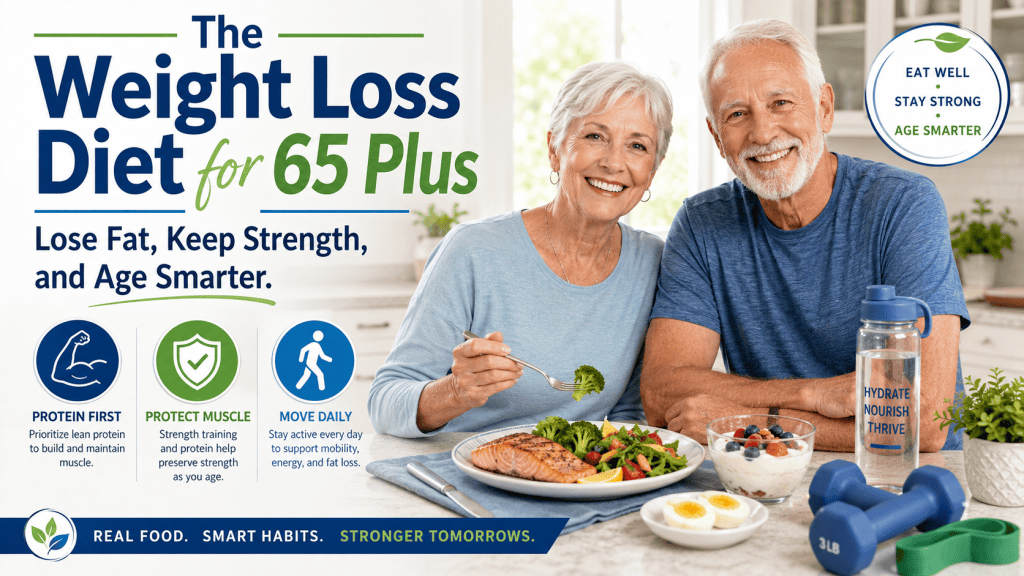
Losing weight after 65 is not about chasing a smaller pants size.
It is about protecting your knees, your heart, your blood sugar, your balance, your energy, and your independence. In other words, weight loss after 65 is not a beauty contest. It is a survival strategy with better snacks.
The problem is that most diet advice was written for younger people. It tells you to slash calories, skip meals, drink shakes, avoid entire food groups, or eat like a rabbit with a calendar app.
That may work for a few weeks, but it can backfire badly for older adults.
After 65, the goal should not be “lose weight as fast as possible.”
The real goal is:
Lose fat without losing strength.
That means a smarter diet. More protein. More fiber. Better hydration. Less junk. More movement. And a serious respect for muscle, because after 65, muscle is not just about looking fit. Muscle is what helps you get out of a chair, climb stairs, carry groceries, prevent falls, and stay independent.
At Avidasana, our focus is healthy aging through better daily choices. Supplements may support a healthy lifestyle, but they are not magic wands. The foundation is still food, movement, sleep, and consistency.
So let’s talk about what a weight loss diet for 65 plus should actually look like.
Why Weight Loss Changes After 65
Your body changes with age. That is not an insult. That is biology.
Muscle mass naturally tends to decline. Metabolism may slow. Joint pain can make movement harder. Medications may affect appetite or weight. Sleep may become less reliable. Recovery may take longer. And the old tricks — skipping breakfast, eating a tiny salad, or living on coffee until dinner — may not work the way they used to.
The National Institute on Aging explains that balancing food intake and physical activity is important for maintaining a healthy weight, and older adults should focus on nutrient-rich foods as calorie needs change.
That last part matters: nutrient-rich foods.
After 65, your body may need fewer calories than it did years ago, but it still needs protein, vitamins, minerals, healthy fats, fiber, and fluids.
So the question is not just, “How do I eat less?”
The better question is:
How do I eat better so my body can stay strong while I lose fat?
That is the grown-up version of dieting.
The First Rule: Protect Muscle
This is where many weight loss plans fail seniors.
The scale goes down, and everyone celebrates. But what did you lose?
Fat?
Water?
Muscle?
A little dignity from eating cabbage soup three times a day?
After 65, losing muscle is a serious problem. Muscle supports mobility, balance, blood sugar control, and daily independence. Harvard Health notes that protein and resistance training together are important for combating age-related muscle loss, and research shows the combination can improve muscle mass and strength in older adults.
That means any weight loss plan for seniors should include two non-negotiables:
Protein and strength movement.
Not bodybuilding. Not showing off. Just reminding your muscles that they are still on the payroll.
You do not want to become lighter and weaker.
You want to become lighter and stronger.
That is the difference between a good plan and a foolish one.
Protein Comes First
For older adults trying to lose weight, protein should be a priority at every meal.
Protein helps preserve muscle, supports recovery, helps you feel full, and reduces the temptation to snack all day. It also helps prevent one of the most common diet mistakes: eating mostly toast, crackers, cereal, soup, and coffee.
That is not a diet. That is a slow surrender.
The National Institute on Aging recommends adding protein foods such as seafood, dairy or fortified soy products, beans, peas, and lentils to meals to help older adults get enough protein and maintain muscle.
Good protein choices include:
Eggs.
Greek yogurt.
Cottage cheese.
Fish.
Chicken.
Turkey.
Lean meat.
Beans.
Lentils.
Tofu.
Protein-rich smoothies when needed.
The best approach is simple: build every meal around a protein anchor.
Breakfast should not be just toast. Add eggs, Greek yogurt, cottage cheese, or a protein smoothie.
Lunch should not be crackers and tea. Add tuna, chicken, beans, lentils, turkey, or cottage cheese.
Dinner should not be a bowl of noodles with a little sauce waving hello from the top. Add fish, chicken, eggs, beans, tofu, or lean meat.
This is not complicated. It is just deliberate.
Fiber Helps You Feel Full
Fiber is one of the best tools for weight loss after 65 because it helps you feel satisfied without relying on oversized portions.
Fiber-rich foods also support digestion, cholesterol management, and blood sugar control. That matters because many adults over 65 are dealing with diabetes, prediabetes, high cholesterol, constipation, or heart-health concerns.
Good fiber foods include:
Oatmeal.
Beans.
Lentils.
Vegetables.
Berries.
Apples.
Pears.
Chia seeds.
Whole grains.
Nuts in modest portions.
A 2025 study in Nature Medicine found that dietary patterns rich in plant-based foods, with moderate inclusion of healthy animal-based foods, were associated with healthier aging.
That does not mean everyone has to become a vegetarian. It means your plate should stop looking like a beige festival.
More color. More plants. More fiber.
Half the plate should be vegetables when possible. Add berries to yogurt. Add beans to soup. Add vegetables to eggs. Add salad before dinner.
The trick is to add better food before trying to remove everything you enjoy. When you fill up on protein and fiber, the cookies lose some of their negotiating power.
Not all of it. Cookies have lawyers. But some of it.
Healthy Fats Belong in the Plan
Older adults should not be afraid of healthy fats.
Healthy fats help with satisfaction, flavor, and nutrient absorption. They can also make meals feel like food instead of punishment.
Good choices include olive oil, avocado, nuts, seeds, fatty fish, and eggs.
The key is portion control. Healthy fat is still calorie-dense. A little olive oil is a good idea. Pouring it like you are baptizing the salad is where things get tricky.
At Avidasana, we believe healthy aging is built on realistic habits. That means no fearmongering about fat, no pretending sugar is harmless, and no magic-food nonsense. Just smarter choices, repeated often enough to matter.
Carbs Are Not the Enemy — Bad Carbs Are
A lot of diet plans tell older adults to fear carbohydrates. That is too simplistic.
Carbohydrates are not automatically bad. Your body can use them for energy, especially if you are walking, exercising, or doing strength work.
The problem is the kind of carbohydrates most people eat.
Better carbs include oatmeal, beans, lentils, berries, apples, sweet potatoes, brown rice, quinoa, and whole-grain bread.
Trouble carbs include cookies, candy, pastries, sugary cereal, white bread, chips, sweet drinks, and desserts that pretend to be breakfast.
Nobody got into trouble because they ate lentils.
Plenty of people got into trouble because potato chips are engineered to make you eat the whole bag while asking, “Who opened this?”
A good 65-plus weight loss diet does not need to ban carbohydrates. It needs to upgrade them.
Hydration Matters More Than People Think
Dehydration can sneak up on older adults. Thirst signals may not be as strong with age, and some medications can affect fluid balance.
Mild dehydration can cause fatigue, dizziness, constipation, confusion, and headaches. It can also make people think they are hungry when they are actually thirsty.
Water, unsweetened tea, sparkling water, broth-based soups, and water-rich foods like fruits and vegetables can all help.
Sugary drinks, sweet tea, soda, and fancy coffee drinks are different. Those can add a surprising amount of calories without much fullness.
One practical habit is to start the day with water and keep a bottle or glass nearby. Not because it is glamorous. Because it works.
Strength Training Is Part of the Diet
This may sound odd, but strength training belongs in a weight loss article.
Why?
Because dieting tells your body, “We are getting less energy.”
Strength training tells your body, “Keep the muscle. We still need it.”
The CDC recommends that adults 65 and older get at least 150 minutes a week of moderate-intensity activity, such as brisk walking, plus muscle-strengthening activities at least two days a week, and balance activities when appropriate.
That does not mean you need to join a gym and start flipping tires like a superhero in orthopedic shoes.
Strength training can be simple:
Wall push-ups.
Chair squats.
Resistance bands.
Light dumbbells.
Heel raises.
Standing from a chair several times.
Carrying groceries carefully.
Mayo Clinic notes that strength training can help preserve and increase muscle mass and strength as people get older, and it may help protect against age-related bone loss.
The point is not to become a bodybuilder.
The point is to stay useful to yourself.
That is healthy aging.
Move After Meals
One of the simplest habits for weight loss and blood sugar support is light movement after meals.
A short walk after lunch or dinner can help reduce the urge to sit down and snack. It may also help the body handle glucose more efficiently.
You do not need to overcomplicate it.
Walk around the house.
Walk the driveway.
Do a few gentle heel raises.
Do wall push-ups.
March in place.
Use a chair for support.
The rule is simple: do not park your body immediately after eating.
Your body is not a storage closet.
Where Supplements May Fit
Supplements can support a healthy lifestyle, but they should never be used as an excuse to ignore food.
No capsule can cancel out a diet built on soda, pastries, chips, and late-night raids on the refrigerator.
That said, some adults use supplements as part of a broader wellness plan. Depending on personal needs, people may discuss options such as vitamin D, magnesium, omega-3s, fiber, protein powder, or other targeted support with their doctor.
This is especially important if you take prescription medication, have kidney disease, heart disease, diabetes, blood pressure concerns, or are preparing for surgery.
Avidasana products are designed to support healthy routines, but they are not meant to diagnose, treat, cure, or prevent disease. The smartest approach is to combine good nutrition, movement, sleep, and professional medical guidance.
You can explore wellness-support products and healthy aging resources at Avidasana.com.
A Simple 65-Plus Weight Loss Day
Here is what a realistic day might look like.
Breakfast: Greek yogurt with berries and chia seeds, or eggs with vegetables and whole-grain toast.
Lunch: Tuna salad, chicken soup with vegetables, lentils, cottage cheese with fruit, or beans with a salad.
Snack: Apple with peanut butter, a boiled egg, cottage cheese, unsweetened green tea, or a protein smoothie.
Dinner: Salmon or chicken with vegetables and a small serving of sweet potato, brown rice, beans, or quinoa.
After dinner: A 5- to 10-minute walk, gentle movement, or a cup of unsweetened tea.
That is not extreme. That is the point.
Extreme diets make exciting headlines and miserable people.
A good plan should be boring enough to repeat and effective enough to matter.
The Foods to Reduce
You do not need to be perfect. Perfect diets usually last until the first birthday party.
But some foods should be reduced if weight loss is the goal:
Sugary drinks.
Cookies.
Candy.
Pastries.
Chips.
Fast food.
Large portions of white bread or pasta.
Fried foods.
Alcohol.
Late-night snacks.
The goal is not to live like a monk with measuring cups.
The goal is to stop giving your body more calories than it can use, especially from foods that do not protect muscle, fullness, or health.
A good rule is:
Eat more food that helps you. Eat less food that tricks you.
That is simple enough to remember.
Sleep and Stress Matter
Poor sleep can increase hunger and cravings. Stress can lead to mindless eating. Boredom can make the kitchen look like an entertainment center.
A strong weight loss plan includes routines:
Go to bed around the same time.
Keep protein-rich foods available.
Plan meals before hunger takes over.
Limit late-night snacking.
Walk daily if possible.
Stay socially connected.
Healthy aging is not just about what is on the plate. It is also about how you live between meals.
The Bottom Line
The best weight loss diet for 65 plus is not a crash diet.
It is a strength-preserving, muscle-protecting, energy-supporting plan built around real food.
Protein first.
Fiber daily.
Healthy fats in moderation.
Better carbohydrates.
Less sugar.
More water.
Strength training twice a week.
Walking or light movement after meals.
Enough sleep.
And patience.
Because after 65, the goal is not to become a smaller, weaker version of yourself.
The goal is to become a lighter, stronger, steadier, healthier version of yourself.
At Avidasana, we believe healthy aging is built from simple daily choices. Supplements may help support the journey, but the foundation remains the same: better food, better movement, better habits, and a better understanding of what your older body needs now.
Do not diet like you are 25.
Eat for the age you are, protect the strength you have, and build the health you still want.
That is how you lose fat without losing yourself.
