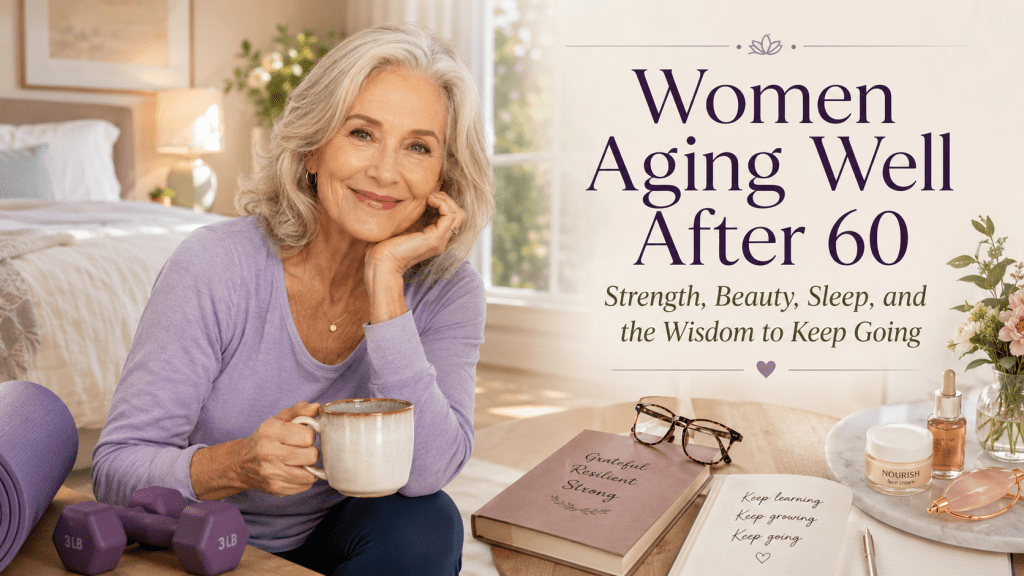
Aging well after 60 is not about trying to look 35 again. That train left the station, and honestly, it probably had uncomfortable seats anyway.
Aging well is about something much more valuable. It is about strength, confidence, energy, dignity, and the daily choices that help a woman feel at home in her own body.
For women, life after 60 can be a powerful chapter. But it is also a chapter that requires more attention. The body changes. Hormones change. Muscle changes. Sleep may change. Skin, joints, balance, mood, and energy may all ask for a little more care than they did years ago.
That does not mean decline is automatic. It means the body is giving new instructions.
The wise woman listens.
At Avidasana, the message is simple: healthy aging is built through small daily habits. You do not need to chase every new wellness trend. You do not need a bathroom cabinet that looks like a science experiment. You need consistency, common sense, good nutrition, movement, sleep, and self-respect.
Aging well is not magic. It is maintenance.
Beauty After 60 Is Not Vanity
Some women were raised to believe that caring about appearance is vanity. That is not true.
There is nothing vain about wanting to look healthy, rested, strong, and put together. Beauty after 60 is not about pretending to be young. It is about refusing to disappear.
A woman who takes care of her hair, skin, posture, clothing, smile, and energy is not being shallow. She is saying, “I am still here, and I still matter.”
There is a big difference between chasing youth and honoring yourself.
After 60, beauty is often connected to wellness. Sleep affects the face. Hydration affects the skin. Protein affects muscle tone. Movement affects posture. Stress affects expression. Nutrition affects energy. Everything shows up somewhere.
That does not mean every wrinkle is a problem. Wrinkles are not the enemy. Giving up is the enemy.
A woman aging well does not have to look younger. She looks alive, present, and engaged.
If you are exploring practical wellness habits, you may enjoy reading more on Avidasana, where the focus is on healthy aging choices that fit real life.
Muscle Is a Woman’s Retirement Account
Muscle after 60 is not just about looking fit. Muscle is independence.
It helps you climb stairs, carry groceries, get out of a chair, protect your joints, support your balance, and manage blood sugar. It also helps protect you from one of the biggest threats of aging: frailty.
Frailty does not usually arrive overnight. It sneaks in quietly. First, the stairs feel harder. Then the grocery bags feel heavier. Then getting up from the floor becomes a major event. Pretty soon, people start avoiding movement because movement feels difficult.
That is how the circle begins.
The way to interrupt that circle is simple: use your muscles before they decide to retire without permission.
This does not mean you need to join a gym and start lifting barbells while wearing a headband from 1984. Strength can start with wall push-ups, resistance bands, chair squats, light dumbbells, heel raises, or simple bodyweight movements.
The goal is not perfection. The goal is giving your body a reason to stay strong.
A good starting habit is this: do a few minutes of strength work several times a week. Not an hour. Not a dramatic announcement. Just enough to remind the body that you still need it.
Strength after 60 is not about becoming someone else. It is about protecting the woman you already are.
Protein Matters More Than Many Women Think
Many women grew up in a world of diet rules: eat less, skip meals, avoid fat, be smaller.
After 60, that thinking can backfire.
The aging body needs nourishment, not punishment. Protein becomes especially important because the body tends to lose muscle more easily with age. If a woman is also trying to lose weight, protein matters even more.
Protein helps maintain muscle, supports healing, helps control hunger, and gives the body the raw material it needs to repair itself.
Good protein choices may include eggs, Greek yogurt, cottage cheese, fish, chicken, turkey, beans, lentils, tofu, and other whole-food options.
This does not mean every meal has to look like a bodybuilder’s lunchbox. But tea and toast is not a healthy aging plan.
A woman after 60 should ask, “Am I feeding my body, or am I just filling my stomach?”
That one question can change everything.
If you are working on building a healthier pantry, Avidasana’s healthy aging approach pairs well with the idea of choosing foods that support the body instead of fighting against it. You can explore more wellness topics at Avidasana.com.
Bone Health Needs Respect
Women need to take bone health seriously after 60.
After menopause, bone loss can accelerate. Osteoporosis can weaken bones and increase the risk of fractures. The difficult part is that bone loss often has no obvious warning sign until a fracture happens.
That is a lousy way to find out there was a problem.
A broken wrist, hip, or spine fracture can change a woman’s independence. It can affect mobility, confidence, and quality of life. That is why bone density testing, strength training, balance work, vitamin D, calcium, and doctor conversations matter.
The point is not to panic. The point is to pay attention.
Bone health is not only about supplements. It is also about movement. Bones respond to healthy stress. Walking, strength training, balance exercises, and proper nutrition all play a role.
Think of it this way: your bones are not museum pieces. They are living tissue. They need support.
Sleep Is Not Wasted Time
Women are often trained to take care of everyone else first. Children, spouses, parents, homes, jobs, meals, appointments, birthdays, emergencies — women carry a lot.
Then after 60, when the body asks for sleep, some women feel guilty resting.
That has to stop.
Sleep is not wasted time. Sleep is repair time. It is brain time. It is immune system time. It is hormone time. It is tomorrow’s energy being built tonight.
Poor sleep can affect memory, appetite, blood pressure, balance, mood, weight, and energy. If a woman is not sleeping well, she should not just “tough it out” and drag herself through the day like a tired old lawn mower.
She should ask why.
Could it be sleep apnea? Pain? Restless legs? Bathroom trips? Anxiety? Alcohol? Caffeine too late? Too much screen time? Medication timing? An uncomfortable mattress?
Sleep problems are not a personal failure. They are information.
Aging well means listening to the body before the whisper becomes a siren.
Good sleep habits may include a regular bedtime, morning light exposure, less caffeine later in the day, a calmer evening routine, limiting alcohol, and keeping the bedroom cool and comfortable.
In a world that celebrates constant busyness, sleep is an act of wisdom.
Movement After Meals Is a Simple Power Habit
One of the easiest wellness habits after 60 is light movement after eating.
This does not mean jogging around the neighborhood after dinner while the neighbors wonder what got into you. It can be simple: a short walk, gentle housework, standing while cleaning the kitchen, heel raises, or slow walking around the house.
After a meal, your body has glucose entering the bloodstream. When you move your muscles, even gently, those muscles can help use some of that glucose.
That is why walking after meals can be such a practical habit.
It does not require a gym. It does not require fancy shoes. It does not require a subscription, an app, or a motivational poster with a mountain on it.
You eat. You move a little.
Simple habits are powerful because people actually do them.
Skin Care Is Self-Respect
Skin changes with age. It becomes thinner, drier, and sometimes more sensitive. Sun damage from earlier years may start showing up more clearly. The skin may not bounce back the way it once did.
That is normal.
But normal does not mean ignored.
Good skin care after 60 does not have to be complicated. Gentle cleansing, moisturizing, sunscreen, hydration, and nutrition can make a real difference. So can sleep and stress management.
The point is not to erase age. The point is to care for the skin you live in.
And yes, sunscreen still matters. The sun does not say, “Oh, she is over 60, I will leave her alone.”
Simple grooming can also help confidence. A good haircut, neat nails, comfortable clothing, and a small daily routine can make a woman feel more like herself.
That is not vanity. That is maintenance of dignity.
Brain Health Is Part of Beauty Too
Aging well is not only physical. A woman’s mind needs care too.
Brain health is supported by movement, sleep, nutrition, social connection, learning, and managing health conditions such as high blood pressure, diabetes, depression, and hearing loss.
The brain likes stimulation. It likes novelty. It likes purpose.
Read. Walk. Dance. Learn a language. Try a new recipe. Join a group. Volunteer. Take a class. Listen to music. Write in a journal. Talk to people who make you think.
Do something that makes the brain wake up and say, “Well, this is interesting.”
Mental sharpness is not only about puzzles, although puzzles are fine. It is about staying engaged in life.
A quiet life can be peaceful. But a disconnected life can become dangerous.
Social Connection Is Health Care
Loneliness can affect health. That may sound dramatic, but anyone who has gone through isolation knows it is true.
After 60, women may face widowhood, divorce, retirement, caregiving fatigue, friends moving away, or adult children living far from home.
A woman can be surrounded by people and still feel alone.
That is why social connection has to be treated as part of wellness. It can come from family, friends, faith groups, walking groups, book clubs, senior centers, volunteering, part-time work, classes, or regular phone calls.
You do not have to become the social director of the universe. You just need enough connection to feel seen, heard, and involved.
Aging well is easier when you have people. Even strong women need support.
The Wisdom to Keep Going
The most powerful part of aging after 60 may be wisdom.
By this age, a woman has seen enough to know that life does not always go according to plan. Bodies change. Families change. Friends change. Work changes. The mirror changes. Priorities change.
Wisdom is the ability to adapt without surrendering.
It says, “I may need to do things differently now, but I am not finished.”
That is the real heart of healthy aging.
Not pretending nothing has changed.
Not giving up because things have changed.
Adapting.
Aging well after 60 means choosing habits that support the next chapter. It means eating enough protein, moving the body, protecting sleep, caring for skin, staying connected, challenging the brain, and showing up for life.
Not perfectly.
Consistently.
A Simple Daily Plan for Women After 60
Start with protein at breakfast.
Move for a few minutes after meals.
Do strength work two or three times a week.
Drink water before you are thirsty.
Get outside for light and fresh air.
Protect your sleep.
Moisturize your skin.
Call someone.
Learn something.
Stand tall.
These are not glamorous habits. They are better than glamorous. They are useful.
Useful wins.
Final Thought
Women aging well after 60 are not trying to turn back the clock. They are learning how to work with the body they have now.
That is not decline. That is wisdom.
Strength is beauty.
Sleep is medicine.
Movement is independence.
Nutrition is self-respect.
And caring for yourself after 60 is not selfish.
It is how you keep going.
Not younger.
Stronger.
Not perfect.
Present.
Not invisible.
Very much alive.
