Losing body fat is rarely about finding one magical ingredient.
If it were, every kitchen cabinet would contain the secret, gyms would be empty, and nobody would ever have to hear the phrase, “You just need to be more consistent.”
The reality is less glamorous but much more useful: sustainable weight management usually comes down to nutrition, physical activity, sleep, and long-term habits.
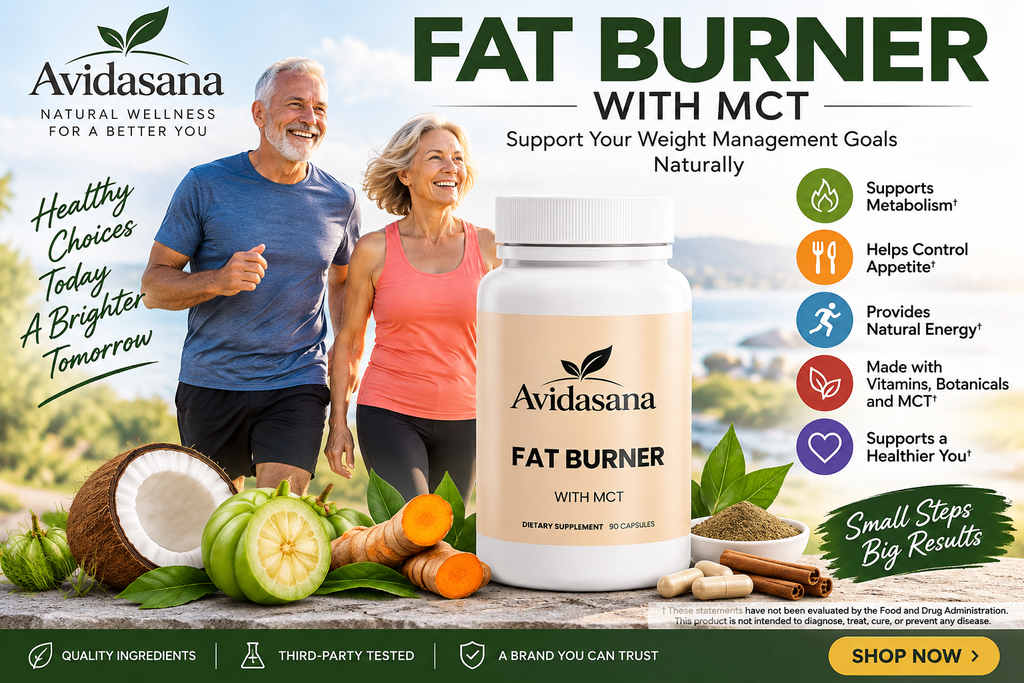
That is where a product like Avidasana Fat Burner may fit—not as a miracle solution, but as a dietary supplement intended to complement a sensible diet and exercise program.
The Avidasana formula contains a broad mixture of nutrients and plant-derived ingredients, including vitamin C, vitamin B6, choline, chromium, MCT oil, CLA, L-carnitine, turmeric, CoQ10, psyllium husk, cinnamon, cranberry concentrate, and several botanical extracts.
So what should someone realistically know before considering a product like this?
First: What Exactly Is a “Fat Burner”?
The term “fat burner” can sound much more dramatic than the science behind it.
Dietary supplements marketed for weight management generally contain ingredients intended to support things such as metabolism, energy use, appetite management, or nutrient metabolism.
That does not mean swallowing a capsule causes stored body fat to simply disappear.
Weight loss still depends heavily on overall energy balance: how much energy you consume compared with how much your body uses over time.
That is why Avidasana itself recommends using its Fat Burner alongside a sensible diet and exercise program rather than presenting it as a replacement for healthy habits.
That distinction matters.
A supplement should be the passenger.
Your lifestyle should still be driving the car.
What Is Inside Avidasana Fat Burner?
This is not a single-ingredient product.
The current formula includes several vitamins, nutrients, fatty acids, amino-acid-related compounds, and botanical ingredients. Among them are:
Vitamin B6 — involved in many aspects of normal metabolism.
Choline — an essential nutrient involved in normal liver function and other physiological processes.
Chromium — a trace mineral involved in normal macronutrient metabolism.
MCT oil — medium-chain triglycerides are fats that are metabolized somewhat differently from many longer-chain dietary fats.
L-Carnitine — plays a role in transporting fatty acids within cells for energy metabolism.
CLA — conjugated linoleic acid, a fatty acid commonly found in weight-management supplements.
Turmeric extract — widely used in nutritional supplements and studied for its naturally occurring compounds.
Coenzyme Q10 — a compound involved in cellular energy production.
The product also includes ingredients such as gymnema sylvestre, garcinia cambogia, spirulina, psyllium husk, cinnamon, kelp, cranberry concentrate, grapefruit extract, and others.
A long ingredient list may sound impressive, but more ingredients do not automatically mean greater weight loss.
That is an important point for anyone shopping for supplements.
What About MCTs and Metabolism?
MCT oil has received considerable attention in the nutrition world.
Medium-chain triglycerides are absorbed and metabolized differently from many longer-chain fats. Some research has explored whether replacing certain dietary fats with MCTs may influence energy expenditure or body composition.
But context matters.
MCT oil still contains calories.
Adding it on top of an already excessive calorie intake does not magically cancel those calories out.
The product page describes MCTs as potentially increasing thermogenesis—the body’s production of heat—which is one reason they often appear in weight-management formulas.
The sensible interpretation is not, “MCT burns fat.”
It is:
MCT may be one component of a broader nutrition strategy, but total diet still matters.
The Role of Exercise
There is another ingredient no supplement manufacturer can put into a capsule:
movement.
Exercise helps preserve muscle while losing weight, improves cardiovascular fitness, supports metabolic health, and increases energy expenditure.
That does not mean everybody has to become a marathon runner.
Walking counts.
Resistance training counts.
Cycling counts.
Swimming counts.
Dancing counts.
Even increasing the amount of ordinary movement you do during the day can matter.
This becomes especially important as we get older because preserving muscle is just as important as watching the number on the scale.
Weight loss without attention to muscle can leave someone lighter but weaker.
That is not the goal.
The goal should generally be improved health and body composition—not simply making the bathroom scale display a smaller number.
Protein Matters More Than Many People Realize
Someone trying to lose weight often focuses exclusively on what to eliminate.
Less bread.
Less dessert.
Less snacking.
Less everything.
But there is another useful question:
What should I make sure I am getting enough of?
Protein belongs near the top of that list.
Adequate dietary protein helps support muscle maintenance, particularly when combined with resistance exercise.
Foods such as eggs, Greek yogurt, cottage cheese, poultry, fish, beans, lentils, and other protein-rich choices can help make a weight-management program more nutritionally complete.
A supplement cannot compensate for an otherwise poor diet.
Fiber Can Help Too
Interestingly, the Avidasana Fat Burner formula includes psyllium husk.
Fiber-rich foods are an important part of a balanced diet because they can help with fullness, digestive health, and overall dietary quality.
Think vegetables, fruits, beans, oats, and whole grains.
There is nothing particularly exciting about vegetables.
No one has ever made a blockbuster movie called Broccoli: The Metabolic Revolution.
But boring nutritional habits often work better than exciting nutritional promises.
Sleep Is Part of Weight Management
People frequently discuss diet and exercise while treating sleep as an afterthought.
That is a mistake.
Poor sleep can influence appetite, food choices, energy levels, and your willingness to exercise.
Seven hours of solid sleep will not magically remove body fat either.
But chronic sleep deprivation can make good nutrition and exercise habits considerably harder to maintain.
A useful weight-management plan should therefore include four pillars:
nutrition, movement, sleep, and consistency.
Supplements come after those—not before them.
How Avidasana Recommends Using the Product
The current Avidasana product page lists the suggested use as four capsules daily, preferably with meals or as directed by a healthcare professional.
It further suggests taking two capsules with water before breakfast and two before dinner when following the product instructions.
The bottle contains 90 capsules.
As always, consumers should follow the actual product label they receive because formulations and directions can change.
Who Should Be Careful?
This part should never be buried underneath the sales pitch.
The manufacturer specifically advises against exceeding the recommended dose and cautions against combining the product with other supplements containing high amounts of chromium.
The product is also not intended for pregnant or nursing women or children under 18, and the manufacturer advises people with diabetes or known medical conditions to consult a physician before taking it.
Because this formula contains numerous botanical ingredients and grapefruit extract, anyone taking prescription medications should consider discussing it with a physician or pharmacist before starting it.
That is particularly sensible for people taking several medications.
“Natural” and “drug-free” do not mean “incapable of interacting with medication.”
Look for Quality Information
One positive feature worth checking when shopping for dietary supplements is whether testing documentation is available.
Avidasana states that this product is independently third-party laboratory verified and provides access to a Certificate of Analysis on the product page.
That does not prove that the supplement will cause weight loss.
Those are two separate questions.
Testing can help establish characteristics such as product quality or composition, while clinical effectiveness requires scientific evidence about whether particular ingredients produce meaningful outcomes in people.
Consumers should understand the difference.
Don’t Fall for the “One Weird Trick” Mentality
Weight-loss marketing has been filled with miracle claims for decades.
Lose 20 pounds without changing what you eat.
Melt belly fat overnight.
Boost metabolism while you sleep.
Take this ingredient and never exercise again.
Those messages are attractive precisely because real lifestyle change takes time.
But when something sounds suspiciously easy, skepticism is healthy.
The more useful question is:
Can this product reasonably complement what I am already doing?
That is a much better standard.
Build the Foundation First
Before spending money on any weight-management supplement, take a quick inventory.
Are you eating enough protein?
Are you consuming vegetables and fiber?
Are liquid calories sneaking into the day?
Are portions gradually getting bigger?
Are you exercising consistently?
Are you getting adequate sleep?
Are you drinking enough water?
Have you been following your routine for weeks—or merely three enthusiastic days?
These questions aren’t glamorous.
But answering them honestly can tell you far more than the latest trendy ingredient.
Where Avidasana Fat Burner May Fit
For an adult who already has the fundamentals in place and wants to add a multi-ingredient dietary supplement, Avidasana Fat Burner offers a combination of vitamins, minerals, amino-acid-related ingredients, MCT oil, fatty acids, and botanical extracts.
The manufacturer specifically positions it for use alongside sensible diet and exercise.
That is the right way to think about it.
Not:
“What pill will make me lose weight?”
But:
“What tools might support the healthy routine I’m already building?”
There is a big difference between those two questions.
And when it comes to lasting weight management, that difference may be more important than anything printed on the front of a supplement bottle.
You can learn more about the ingredients, suggested use, laboratory documentation, and current product details at Avidasana Fat Burner.
Dietary supplements are not intended to diagnose, treat, cure, or prevent disease. Individual results vary. Speak with a healthcare professional before beginning a new supplement, particularly if you have a medical condition or take medication.
