Sometimes the most useful health tools are not the newest, most complicated, or most expensive.
Sometimes they are nutrients your body has relied on your entire life.
Magnesium is one of them.
Magnesium is an essential mineral involved in hundreds of processes throughout the body, including normal muscle and nerve function, blood glucose regulation, blood pressure regulation, protein production, bone health, and DNA formation. The National Institutes of Health describes magnesium as a nutrient the body needs to stay healthy and function normally.
And yet magnesium has recently become especially popular for another reason:
People are looking for simple ways to support relaxation, sleep, muscle function, and healthy aging.
One form receiving considerable attention is magnesium glycinate, sometimes called magnesium bisglycinate.
So what makes this form different, and does it deserve a place in your daily wellness routine?
Let’s take a sensible look.
What Is Magnesium Glycinate?
Magnesium glycinate is magnesium bound to the amino acid glycine.
That may sound unnecessarily scientific, but the idea is fairly straightforward.
Magnesium supplements come in several forms because magnesium needs to be attached to another compound. Common forms include magnesium oxide, citrate, chloride, and glycinate.
Each form behaves somewhat differently in the digestive system.
Magnesium glycinate has become popular because it is generally considered a well-tolerated form of supplemental magnesium. People who want to add magnesium without deliberately looking for the laxative effect associated with some other forms often consider glycinate.
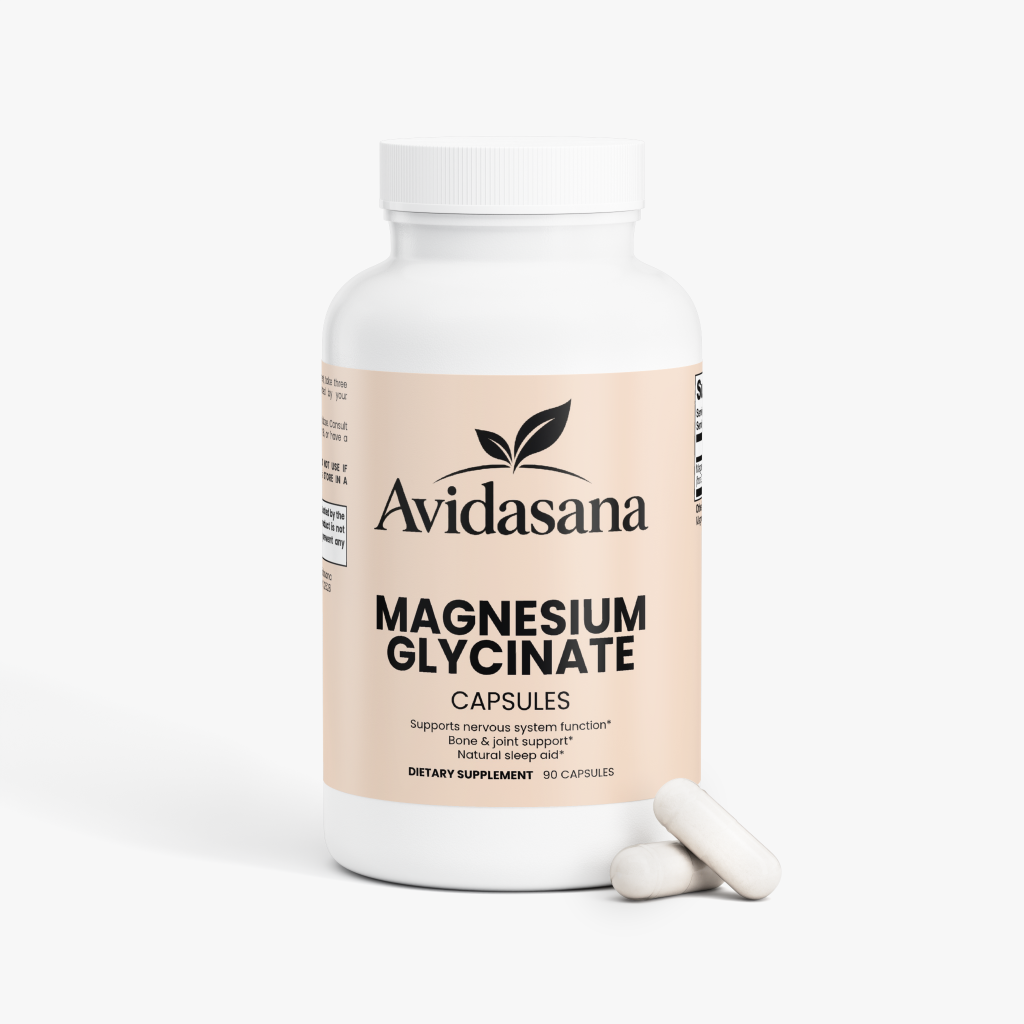
If you’re exploring nutritional support as part of a broader healthy-aging routine, you can learn more about A Vida Sana Magnesium Glycinate here.
Why Does Magnesium Matter More Than We Realize?
Magnesium does not receive the publicity of protein, vitamin D, or omega-3 fats.
But quietly, behind the scenes, your body uses it constantly.
According to the National Institutes of Health, magnesium contributes to normal muscle and nerve function and helps regulate blood sugar and blood pressure. It is also involved in making protein, bone, and DNA.
That makes magnesium especially interesting as we grow older.
Healthy aging isn’t about finding one miraculous supplement.
It is about maintaining the systems that allow us to continue functioning.
Muscles.
Nerves.
Bones.
Metabolism.
Sleep.
Movement.
Nutrition.
All of these pieces interact.
That’s why at A Vida Sana, we prefer looking at supplements as tools that may support a healthy lifestyle rather than magic solutions that replace one.
Can You Get Enough Magnesium From Food?
Absolutely.
And food should remain the foundation.
Good dietary sources of magnesium include:
- Nuts
- Seeds
- Beans and other legumes
- Dark leafy green vegetables
- Whole grains
- Some fortified foods
Harvard’s Nutrition Source also identifies legumes, leafy greens, nuts, seeds, whole grains, and fortified cereals as useful sources of magnesium.
A handful of almonds doesn’t need a marketing campaign.
Spinach doesn’t come with an influencer.
Beans don’t promise to “transform your wellness journey.”
They’re simply nutritious foods.
But not everyone consistently eats enough magnesium-rich foods.
Dietary habits vary. Appetite may change with age. Some people eat limited diets, and certain health conditions and medications may also affect magnesium status.
That’s where supplementation may become worth discussing with your healthcare professional.
Why Is Magnesium Glycinate Associated With Relaxation?
This is probably the reason you’ve heard so much about it.
Magnesium is involved in normal nervous system function, while glycine itself is an amino acid involved in several physiological processes.
As a result, magnesium glycinate is frequently promoted for relaxation and sleep.
But this is where we need to separate reasonable interest from advertising hype.
There is some research suggesting magnesium supplementation may modestly help certain people with sleep, particularly when magnesium intake or status is low.
A 2025 randomized controlled trial involving adults reporting poor sleep found that magnesium bisglycinate produced a modest improvement in insomnia severity compared with placebo. The researchers also emphasized that more research is needed.
That word matters:
Modest.
Not miraculous.
Not “take two capsules and sleep like a teenager.”
That’s not what the science says.
What Does the Research Say About Magnesium and Sleep?
The evidence is interesting, but it is not settled.
The National Center for Complementary and Integrative Health, part of the NIH, notes that research on magnesium supplements for insomnia remains limited.
Some studies have suggested benefits in sleep onset, sleep efficiency, or sleep duration, particularly among older adults, but the studies have generally been small or of limited quality.
That doesn’t mean magnesium doesn’t work.
It means we shouldn’t turn a promising nutritional tool into a medical guarantee.
Sleep is complicated.
Stress matters.
Pain matters.
Sleep apnea matters.
Medications matter.
Alcohol matters.
Your bedroom environment matters.
And spending two hours watching videos on your phone before bed probably isn’t helping either.
A supplement should support good sleep habits, not replace them.
Magnesium Is Not a Sleeping Pill
This is an important distinction.
Magnesium glycinate isn’t intended to knock you unconscious.
And that’s probably a good thing.
Think of magnesium as potentially supporting the normal systems involved in relaxation rather than functioning like a prescription sedative.
For someone who is deficient or isn’t getting enough magnesium in their diet, correcting that deficiency makes nutritional sense.
But persistent insomnia deserves proper investigation.
If you’re regularly unable to sleep, waking repeatedly during the night, experiencing severe daytime sleepiness, or suspecting a condition such as sleep apnea, talk with your healthcare provider.
Don’t try to solve every sleep problem with a supplement bottle.
What About Muscle Function?
This may actually be one of magnesium’s most important roles for older adults.
Magnesium contributes to normal muscle and nerve function.
And when we talk about healthy aging, muscle deserves far more attention than it usually gets.
Muscle isn’t simply about looking athletic.
Muscle helps you:
- Stand up from a chair
- Walk confidently
- Climb stairs
- Carry groceries
- Maintain balance
- Remain independent
That means nutrition, protein intake, magnesium, physical activity, and resistance training all belong in the same healthy-aging conversation.
A supplement cannot substitute for using your muscles.
Unfortunately, nobody has yet invented a capsule that does your squats for you.
Magnesium and Bone Health
Most people immediately think of calcium when discussing bones.
But bone health is more complicated than simply drinking milk.
Magnesium contributes to normal bone formation and interacts with other nutrients involved in skeletal health.
Approximately half or more of the magnesium stored in the human body is found in bone, according to Oregon State University’s Linus Pauling Institute.
This doesn’t mean taking magnesium automatically prevents osteoporosis.
It means magnesium is one component of the broader nutritional structure that supports normal bone health.
Protein matters.
Vitamin D matters.
Calcium matters.
Exercise matters.
Resistance training matters.
Balance training matters.
Healthy aging is usually a team sport.
Magnesium and the Nervous System
Magnesium’s role in nerve function is another reason it has become associated with relaxation and well-being.
Your nervous system is constantly communicating.
Muscles contract.
Muscles relax.
Nerve impulses travel.
The brain responds to signals.
Magnesium participates in this extraordinarily complicated machinery.
That’s far more interesting than simply calling it a “sleep supplement.”
You aren’t buying sleep in a capsule.
You’re providing your body with an essential nutrient it already requires.
Should Everyone Take Magnesium Glycinate?
No.
That’s the answer supplement marketing doesn’t always give you.
Not everyone needs a magnesium supplement.
Someone eating a magnesium-rich diet and maintaining adequate magnesium status may not need additional supplementation.
And certain people should be particularly careful.
The NIH warns that excessive magnesium from supplements and medications can cause diarrhea, nausea, and abdominal cramping. Extremely high amounts can become dangerous.
People with impaired kidney function need to be especially cautious because the kidneys play an important role in clearing excess magnesium.
Magnesium may also interfere with the absorption or effectiveness of certain medications, including some antibiotics and osteoporosis medications.
If you take prescription medications or have kidney disease or another significant medical condition, discuss magnesium supplementation with your healthcare provider or pharmacist first.
That isn’t legal fine print.
It’s common sense.
More Is Not Better
Supplements create a peculiar psychological trap.
If one capsule is good, people sometimes assume four must be fantastic.
Your body disagrees.
For adults, the NIH-established tolerable upper intake level for magnesium from supplements and medications is generally 350 mg per day unless a healthcare professional recommends otherwise. Importantly, that upper limit applies to supplemental magnesium, not magnesium naturally present in food.
Always pay attention to the amount of elemental magnesium listed on the Supplement Facts panel rather than assuming the weight of the entire magnesium compound is the amount of magnesium you’re receiving.
And follow the directions on the product you’re using.
Supplements Should Supplement Something
The word itself tells us what supplements are supposed to do.
They supplement.
They don’t replace.
Magnesium glycinate shouldn’t replace vegetables.
It shouldn’t replace exercise.
It shouldn’t replace protein.
It shouldn’t replace good sleep habits.
And it shouldn’t replace medical treatment when medical treatment is necessary.
We think the strongest approach is much simpler:
Build a healthy foundation first.
Eat real food.
Move your body.
Maintain muscle.
Get enough sleep.
Manage stress.
Stay socially engaged.
And use supplements selectively when they make sense.
That’s the broader philosophy behind the wellness information you’ll find throughout A Vida Sana.
Who Might Consider Magnesium Glycinate?
Someone might reasonably discuss magnesium supplementation with a healthcare professional if they:
- Eat relatively few magnesium-rich foods
- Have been advised that their magnesium intake is inadequate
- Want a generally well-tolerated form of supplemental magnesium
- Are building a broader nutrition and healthy-aging program
- Are interested in magnesium’s role in muscle and nerve function
- Want to explore whether correcting inadequate magnesium intake may support overall wellness
The key word is support.
We should be skeptical whenever a supplement claims to “cure,” “reverse,” or “guarantee.”
Your body is far too complicated for promises like that.
A Better Way to Think About Supplements
Instead of asking:
“What will this supplement fix?”
Ask:
“What normal function does this nutrient help support?”
That’s a much better question.
For magnesium, the list is substantial.
Normal nerve function.
Normal muscle function.
Normal blood pressure regulation.
Normal glucose metabolism.
Protein production.
Bone formation.
DNA production.
Those are legitimate physiological roles supported by established nutritional science.
Everything beyond that deserves appropriate skepticism.
The Bottom Line on Magnesium Glycinate
Magnesium glycinate isn’t a miracle.
That’s actually one reason it’s worth considering.
Magnesium is an essential nutrient your body genuinely needs.
The glycinate form offers a practical way to supplement magnesium for people who decide, together with their healthcare professional when appropriate, that supplementation makes sense.
There is emerging research suggesting magnesium bisglycinate may modestly support sleep in some adults with poor sleep, but current evidence is not strong enough to call it a treatment for insomnia.
Its more established importance comes from something less glamorous but far more meaningful:
Your body needs magnesium to function properly.
That’s the foundation.
If you’re interested in adding magnesium to your wellness routine, you can learn more about A Vida Sana Magnesium Glycinate.
And while you’re there, explore more of the healthy-aging and wellness resources at A Vida Sana.
Because healthy aging is rarely about discovering one magical ingredient.
It’s about giving your body the tools it needs, making better choices consistently, and protecting the health that allows you to keep living your life.
Better choices. Better health. A better chance to keep doing the things you enjoy.
This article is for educational purposes only and is not intended to diagnose, treat, cure, or prevent any disease. Dietary supplements are not a substitute for medical care or a balanced diet. Consult your healthcare professional before using magnesium supplements if you have kidney disease, take prescription medications, are pregnant or nursing, or have questions about whether supplementation is appropriate for you.
