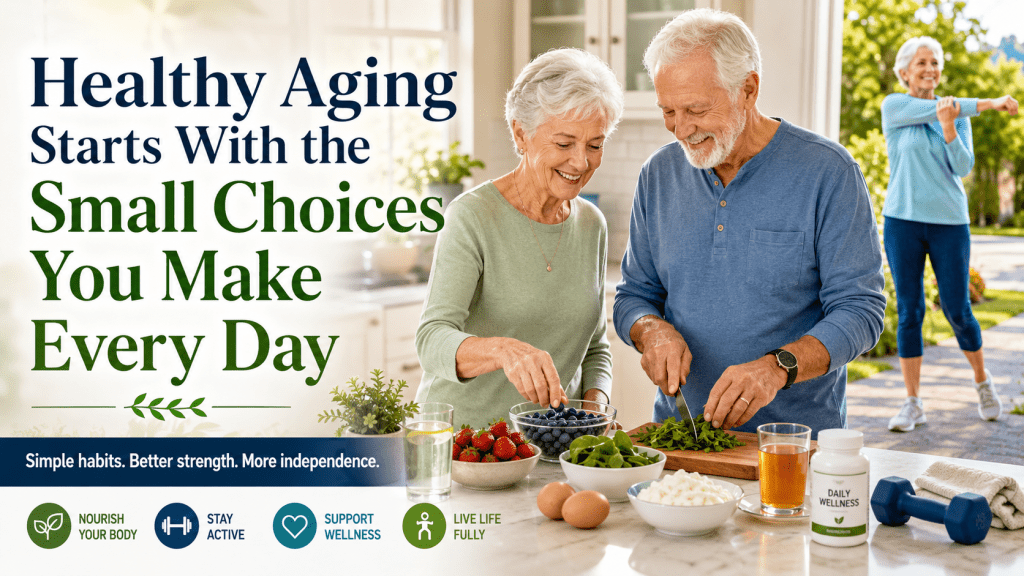
Healthy aging does not begin with a miracle pill, a magic drink, or some complicated routine that requires a personal chef, a trainer, and a bank account with no bottom.
It begins with small daily choices.
That may not sound exciting at first. We like big promises. We like dramatic headlines. We like the idea that one product, one food, one supplement, or one secret habit will suddenly fix everything.
But real health usually does not work that way.
Your body is not a light switch. It is more like a garden. You do not water it once and say, “Well, that should do it for the next seven years.” You take care of it a little at a time. You give it what it needs. You remove what is hurting it. You pay attention before the weeds take over and start charging rent.
That is the larger truth of aging: your body keeps changing, so your habits must change with it.
At Avidasana, the goal is simple: support better daily choices for people who want to feel stronger, think clearer, move better, and stay independent longer.
Not hype. Not fear. Not “buy this or else.”
Just practical support for the body you live in every day.
Aging Is Not the Enemy
One of the biggest mistakes people make is thinking aging is the enemy.
It is not.
Aging is natural. The real challenge is not aging itself. The challenge is neglect.
When we are younger, the body is often forgiving. You can eat badly, sleep poorly, skip exercise, and somehow still function. You may not feel great, but you can get away with it.
Then elderhood arrives.
Suddenly, the body starts sending memos.
The knees send one. The back sends one. The stomach sends one. The brain sends a few reminders, usually when you walk into a room and forget why you went there.
The body is not betraying you. It is asking for better management.
That is where healthy aging begins. Not with panic. Not with shame. With awareness.
Food First, Supplements Second
Let’s be honest. Supplements can be useful, but they are not a replacement for food, movement, sleep, and common sense.
The foundation is still what you eat, how you move, how you sleep, how you manage stress, and how connected you stay with other people.
The CDC lists nutrition, physical activity, mental stimulation, sleep, social connection, and emotional well-being as important parts of healthy aging. That is not glamorous, but it is true. The basics still matter.
Think of supplements as support, not a substitute.
A supplement cannot cancel out a diet built on soda, chips, cookies, and “whatever was closest to the recliner.” It cannot make up for never moving your body. It cannot replace sleep. It cannot do the work of a balanced life.
But when used wisely, supplements may help fill gaps and support specific needs.
That is the key phrase: used wisely.
The NIH Office of Dietary Supplements reminds consumers to talk with a healthcare provider before using supplements to treat a health condition, or before taking them with prescription medicines. That matters because supplements can interact with medications and may not be right for every person.
So the smart approach is not, “Take everything.”
The smart approach is, “What does my body actually need?”
The Older Body Needs Better Inputs
As we age, the body may become less forgiving. Muscle can decline. Energy can dip. Recovery may take longer. Digestion may change. Sleep can become lighter. Joints may complain. Memory may need more support.
This does not mean you are broken.
It means the body needs better inputs.
Think about a car. If you own an older car, you do not say, “Well, this car has 150,000 miles on it, so I guess oil no longer matters.” No. That is exactly when maintenance matters more.
The human body is no different.
Protein matters more.
Hydration matters more.
Fiber matters more.
Movement matters more.
Sleep matters more.
Good nutrition matters more.
And yes, for some people, the right supplements may matter more too.
But the goal should always be support, not wishful thinking.
Healthy Aging Is Built on Daily Habits
A healthy aging plan does not need to be complicated. In fact, if it is too complicated, most people will not stick with it.
The best plan is usually the one you can actually do.
A simple daily plan may include:
Eating more protein.
Adding colorful foods like berries, greens, and vegetables.
Drinking more water.
Taking a short walk.
Doing light strength exercises.
Getting sunlight earlier in the day.
Keeping a regular bedtime.
Cutting back on sugar.
Staying socially connected.
Using supplements thoughtfully when they make sense.
None of this sounds fancy. But fancy is often overrated.
Your body does not care whether your routine sounds impressive. It cares whether you do it.
Muscle Is a Retirement Account for the Body
One of the most important parts of healthy aging is maintaining muscle.
Muscle is not just for athletes. It is not just for young people. It is not just for people wearing tight shirts at the gym and staring into mirrors like they are waiting for applause.
Muscle is independence.
Muscle helps you get out of a chair. It helps you climb stairs. It helps you carry groceries. It helps with balance. It helps protect against falls. It helps your body handle glucose. It helps you remain capable.
As we age, losing muscle can quietly change everyday life. First, the grocery bags feel heavier. Then stairs feel harder. Then getting off the floor becomes a major negotiation with gravity.
That is why protein, movement, and resistance exercise are so important.
You do not need to become a bodybuilder. You do not need to bench press the refrigerator. But you do need to give your muscles a reason to stay.
That might mean walking, wall push-ups, chair squats, resistance bands, light dumbbells, or simple heel raises.
The message is simple: use it, or the body starts downsizing.
And unlike a company downsizing, your body does not send a polite email first.
Brain Health Needs Daily Attention Too
Healthy aging is not only about the body. It is also about the brain.
The brain needs blood flow, nutrients, sleep, learning, and social connection. It needs stimulation. It needs routine, but it also needs novelty.
Reading, learning new skills, dancing, walking, talking with friends, doing puzzles, listening to music, and staying curious can all support a more active life.
Food also matters. Diets rich in whole foods, healthy fats, colorful plants, and quality protein may support overall health, including the brain.
But again, the goal is not perfection.
The goal is improvement.
You do not need to wake up tomorrow and become a monk who eats kale by candlelight while journaling about antioxidants. You just need to start making better choices more often.
Add the blueberries.
Eat the eggs if they work for you.
Choose water more often.
Walk after meals.
Turn off the late-night snack parade.
Go to sleep at a reasonable time.
Call someone instead of sitting alone all day.
Small choices add up.
The Problem With Modern Eating
One of the great challenges today is that unhealthy food is everywhere.
It is cheap-looking, convenient, colorful, and designed to keep you coming back. But here is the irony: a lot of junk food is not even cheap anymore.
A bag of chips can cost more than a dozen eggs.
A soda habit can quietly drain money while doing nothing useful for the body.
Sweet snacks may feel comforting in the moment, but they often leave the body asking, “Was that the plan?”
For seniors on a fixed income, this matters. Healthy choices do not always have to be expensive. Oatmeal, eggs, beans, sardines, frozen vegetables, frozen berries, Greek yogurt, cottage cheese, and green tea can be practical, affordable options.
Healthy aging does not require luxury food.
It requires better direction.
Supplements Should Be Chosen With a Purpose
One of the biggest mistakes people make with supplements is buying too many at once.
They see one headline about magnesium. Then one about turmeric. Then one about collagen. Then one about probiotics. Then one about creatine. Before long, the kitchen counter looks like a small vitamin warehouse.
That is not a plan. That is a traffic jam.
A smarter approach is to ask:
What am I trying to support?
Am I already taking medication?
Have I discussed this with my doctor or pharmacist?
Is this supplement appropriate for my age and health situation?
Is the dose reasonable?
Is the product from a company I trust?
Am I giving it enough time to evaluate how I feel?
The NIH provides fact sheets on vitamins, minerals, herbs, botanicals, probiotics, and other dietary supplements, which can help consumers become better informed before making decisions.
The point is not to scare people away from supplements. The point is to use them like an adult, not like someone grabbing everything off the shelf because the label had shiny letters.
Healthy Aging Is About Independence
At the heart of all this is independence.
Most people do not want to live longer just to sit in a chair watching life happen from across the room. They want to move. Think. Decide. Visit. Travel. Laugh. Dance. Cook. Shop. Spend time with family. Stay in their home. Stay in control.
That is what healthy aging is really about.
It is not about chasing youth.
It is about protecting function.
The goal is not to be 25 again. Frankly, some of us were not that sensible at 25 anyway.
The goal is to be strong enough, clear enough, and capable enough to enjoy the years ahead.
That requires daily investment.
Food is an investment.
Movement is an investment.
Sleep is an investment.
Social connection is an investment.
The right supplement support, when appropriate, can also be part of that investment.
Start Small, But Start
The worst plan is the one you never begin.
People often wait until they can do everything perfectly. That is a trap.
Start with one improvement.
Add a short walk after lunch.
Replace one sugary drink with water or tea.
Add protein to breakfast.
Go to bed at a consistent time.
Try a simple strength movement.
Review your supplements with your doctor or pharmacist.
Add one healthy food to your shopping cart.
Small steps may not feel dramatic, but they are powerful because they are repeatable.
And repeatable habits are what change lives.
The Bottom Line
Healthy aging is not one product, one food, one exercise, or one secret.
It is a pattern.
It is the pattern of feeding your body better, moving more often, sleeping more consistently, staying connected, thinking clearly about your choices, and giving your body support where it truly needs it.
Supplements can be part of that support, but they should never replace the basics. They should fit into a larger healthy aging plan.
At Avidasana, we believe better health begins with better daily choices.
Not pressure.
Not hype.
Not miracle claims.
Just practical support for people who want to stay active, independent, and engaged in life.
Because the future of aging is not about giving up.
It is about adapting.
And sometimes the best way to change tomorrow is to make one better choice today.
