Most people think about health care after something goes wrong.
The knee hurts. The blood pressure is too high. The doctor says the sugar numbers are creeping up. The pants suddenly act like they shrank in the dryer, even though we know perfectly well the dryer had nothing to do with it.
But healthy aging works best when we stop waiting for the warning lights to flash.
Preventive care is about staying ahead of problems before they become bigger, more expensive, more painful, and harder to manage. It is not about fear. It is about awareness. It is about taking small, steady steps today so tomorrow does not sneak up and hit us with a frying pan.
At AvidaSana, we believe healthy aging is not about chasing youth. It is about supporting the body you have, respecting the years you have lived, and making smarter choices going forward. The goal is simple: stay active, stay alert, stay independent, and stay in the game as long as possible.
That is where preventive care comes in.
What Is Preventive Care?
Preventive care means health services and daily habits designed to reduce risk, catch problems early, and support long-term wellness.
This can include regular checkups, screenings, vaccines, blood pressure checks, cholesterol testing, diabetes screening, cancer screenings, bone density testing, vision exams, hearing checks, dental care, and conversations with your doctor about weight, sleep, nutrition, exercise, memory, balance, and medications.
But preventive care is not only what happens in a doctor’s office.
It is also what happens at your kitchen table, your grocery store, your walking shoes, your water bottle, your sleep routine, and your daily habits.
A doctor may check your blood pressure once in the office, but what you eat, how much you move, how well you sleep, and whether you manage stress all matter every single day. Prevention is not one appointment. It is a lifestyle.
And let’s be honest. None of us gets healthier by accident. Aging well requires participation. You cannot outsource your entire health to a doctor, a pill, a supplement, or a medical plan. Those things can help, but you still have to show up for yourself.
Why Prevention Becomes More Important With Age
When we are younger, the body often forgives us. We eat poorly, sleep badly, skip exercise, and somehow bounce back. Youth is generous that way. It covers up a lot of bad decisions.
But as we age, the body becomes less forgiving. That does not mean we are falling apart. It means the margin for neglect gets smaller.
Blood sugar may rise more easily. Muscle mass may decline. Bones may become weaker. Balance may become less reliable. Digestion may slow down. Inflammation may increase. Sleep may become lighter. Recovery may take longer.
This is not a reason to panic. It is a reason to pay attention.
The larger truth of aging is adaptation. The body changes, so our habits must change with it. What worked at 40 may not work at 70. What we ignored at 50 may demand attention at 75. That is not failure. That is life handing us a new instruction manual, usually in tiny print.
Preventive care helps us read that manual before something breaks.
The Power of Early Detection
One of the biggest benefits of preventive care is early detection.
Many health problems begin quietly. High blood pressure often has no obvious symptoms. Type 2 diabetes can develop slowly. Colon cancer may start before a person notices anything unusual. Bone loss can progress for years before a fracture happens. Hearing loss may gradually lead to isolation before the person realizes how much they have withdrawn from conversations.
Early detection gives us options.
When a problem is found early, it may be easier to manage. Lifestyle changes may work better. Treatment may be less aggressive. Complications may be avoided. Quality of life may be protected.
Ignoring symptoms does not make us tough. It just gives the problem more time to unpack its suitcase and move in.
Many people say, “I don’t want to know.”
That is understandable, but it is not wise. Not knowing does not protect us. It only delays action. Knowing gives us a chance to do something.
Screenings Are Not Just Tests — They Are Information
Health screenings are tools. They give you and your doctor information.
A blood pressure reading tells you how hard your heart and arteries are working. A cholesterol test gives insight into cardiovascular risk. A blood sugar test can reveal diabetes or prediabetes. A bone density test may show whether your bones need more support. A colonoscopy or other colon cancer screening may detect changes before cancer develops or spreads.
These tests are not about labeling you as sick. They are about giving you a clearer picture.
Think of screenings like checking the weather before a road trip. If the forecast says heavy rain, you do not cancel life. You bring an umbrella, slow down, and drive smarter.
Health information lets you drive smarter.
Preventive Care Also Includes Vaccines
Vaccines are another important part of prevention, especially as we age.
The immune system changes over time. Seniors may be more vulnerable to complications from infections such as flu, pneumonia, COVID-19, shingles, and RSV. These illnesses can be more than an inconvenience. For older adults, they can lead to hospitalization, weakness, falls, or a long recovery.
Vaccines are not a guarantee that you will never get sick. They are a tool to reduce risk and help the body respond better.
This is a conversation to have with your doctor or pharmacist. Ask which vaccines are appropriate for your age, health history, and medical conditions. Do not guess. Do not rely on what your neighbor’s cousin’s barber said. That is not a medical strategy. That is how rumors get a driver’s license.
The Daily Side of Prevention
Medical screenings are important, but everyday choices matter just as much.
Prevention lives in the small habits we repeat.
A short walk after meals may help support healthier blood sugar control. Strength training can help protect muscle mass. Protein supports the body’s repair and maintenance needs. Fiber supports digestion and heart health. Hydration helps energy, digestion, and general function. Sleep supports the brain, immune system, hormones, and recovery.
None of this sounds dramatic. That is the point.
Good health is usually built through ordinary actions repeated consistently. It is not one heroic workout. It is regular movement. It is not one perfect salad. It is a pattern of better eating. It is not one good night of sleep. It is a routine.
Aging well is not about perfection. Perfection is exhausting. It is also usually where people quit.
The better goal is consistency.
Food as Preventive Support
Food is one of the most powerful tools for healthy aging.
That does not mean food is medicine in a magical sense. It means nutrition gives the body the raw materials it needs to function.
Protein helps maintain muscle. Healthy fats support brain and heart health. Colorful fruits and vegetables provide antioxidants and plant compounds. Fiber supports digestion and cholesterol management. Fermented foods may support gut health. Minerals such as magnesium, calcium, and potassium play important roles in muscle, nerve, bone, and cardiovascular function.
The problem is that many people grew up in an era where convenience foods took over the kitchen. Sugar, refined carbohydrates, processed snacks, and oversized portions became normal. Many of us were not taught how deeply food affects long-term health.
That is not a reason for guilt. It is a reason for realization.
Once we know better, we can do better.
Simple foods can make a real difference: eggs, yogurt, cottage cheese, berries, salmon, sardines, beans, leafy greens, olive oil, nuts, seeds, and vegetables. You do not need a celebrity chef. You need a grocery cart with a little common sense.
And no, eating healthier does not mean living on lettuce and sadness.
Movement: The Underrated Preventive Habit
Movement may be one of the most underestimated forms of preventive care.
Walking, stretching, balance exercises, resistance bands, light weights, cycling, swimming, dancing, gardening, or even simple chair exercises can all help keep the body working.
As we age, muscle becomes especially important. Muscle is not just for athletes or people flexing in gym mirrors like they just discovered electricity. Muscle helps with balance, glucose control, metabolism, independence, and fall prevention.
Losing muscle can make everyday life harder. Getting out of a chair, carrying groceries, climbing stairs, and recovering from illness all depend on strength.
That is why healthy aging should include some form of strength support. It does not have to be extreme. It has to be regular.
Start where you are. Do what you can. Build slowly.
The body responds to effort, even later in life. That is encouraging news.
Sleep and Recovery Matter
Sleep is not wasted time. It is repair time.
During sleep, the body restores energy, supports immune function, processes memory, regulates hormones, and repairs tissues. Poor sleep can affect mood, appetite, blood sugar, blood pressure, and brain function.
Many seniors struggle with sleep, but that does not mean it should be ignored. Sleep apnea, nighttime urination, pain, medications, stress, and poor sleep habits can all interfere with rest.
Talk with your doctor if sleep is a problem. Also look at basic habits: consistent bedtime, morning light exposure, less late-night snacking, reduced evening screen time, and a calmer nighttime routine.
The body likes rhythm. Unfortunately, many of us treat bedtime like a suggestion from a committee we do not respect.
A consistent routine can help.
Supplements Can Support, But They Do Not Replace Good Habits
This is where honesty matters.
Supplements can be helpful, but they are not magic. They do not replace food, movement, sleep, hydration, or medical care.
A supplement should support a healthy lifestyle, not rescue an unhealthy one.
At AvidaSana, the goal is to support real-life wellness with products that fit into practical daily routines. Whether someone is focused on digestion, bone support, muscle maintenance, skin hydration, brain and body energy, or general healthy aging, the foundation should always be the same: better habits first, supportive tools second.
Before starting any supplement, especially if you take medications or have medical conditions, talk with your healthcare provider. This is particularly important for people on blood thinners, diabetes medications, blood pressure medications, or multiple prescriptions.
More is not always better. Smart is better.
Preventive Care Is Also About Independence
For many seniors, the real goal is not just avoiding illness. It is maintaining independence.
People want to stay in their homes. They want to drive safely. They want to travel, dance, garden, shop, visit family, enjoy hobbies, and make their own decisions. They want to keep living, not just existing.
Preventive care helps protect that independence.
A vision exam may reduce fall risk. A hearing check may improve communication and social connection. A bone density test may help prevent fractures. A medication review may reduce dizziness or confusion. A wellness visit may uncover memory changes, depression, or mobility risks.
These are not small things. They are quality-of-life issues.
Aging well is not one big decision. It is a series of smaller decisions that add up.
Ask Better Questions
One of the best things you can do for your health is ask better questions.
Ask your doctor:
What preventive screenings am I due for?
Are my blood pressure, cholesterol, and blood sugar in a healthy range?
Do I need a bone density test?
Are my vaccines up to date?
Are any of my medications increasing fall risk?
Should I be concerned about memory, balance, sleep, or hearing?
What can I do over the next six months to reduce my health risks?
These questions turn you from a passive patient into an active participant.
That matters. Nobody cares more about your future than you do.
The Bottom Line
Preventive care is not about worrying more. It is about paying attention sooner.
It means using screenings, wellness visits, vaccines, daily habits, nutrition, movement, sleep, and smart supplementation to support a healthier tomorrow.
The future of aging is changing. We know more now than previous generations knew. We have better tools, better information, and more ways to support the body as it ages.
But knowledge only helps when we use it.
So schedule the checkup. Ask about the screening. Take the walk. Eat the better meal. Protect your sleep. Support your strength. Review your medications. Pay attention to the warning signs.
Healthy aging is not about doing everything perfectly.
It is about doing enough of the right things, often enough, to give yourself a better chance.
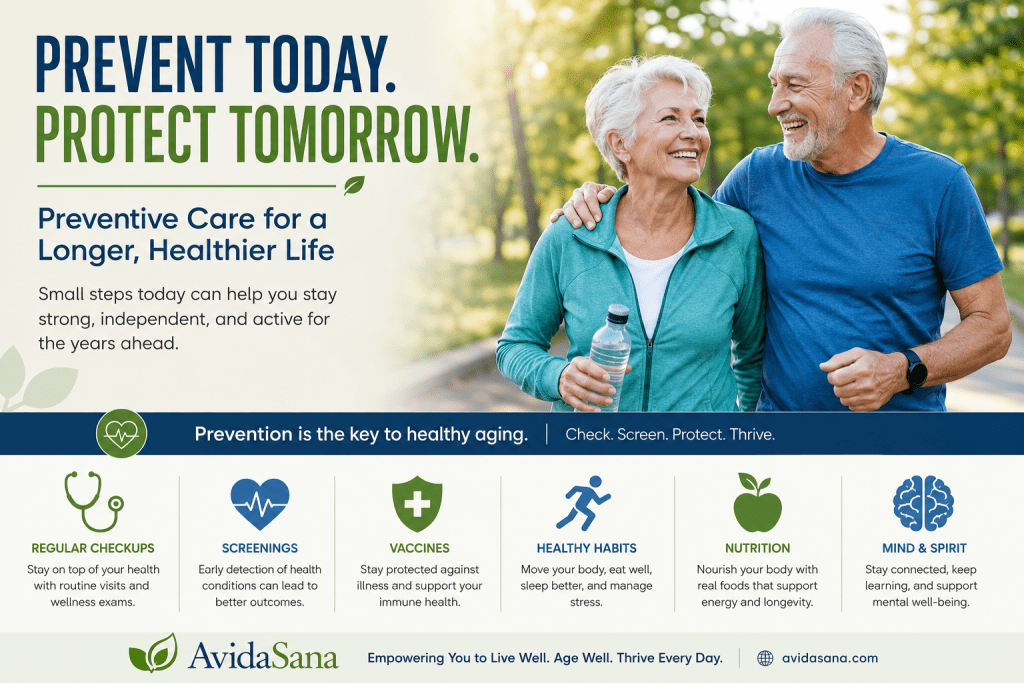
Prevent today. Protect tomorrow.
That is not just a slogan. It is a plan.
