There is a funny thing about getting older.
When we were young, we thought health was something that just happened. We could eat a questionable hot dog at midnight, sleep four hours, and somehow wake up ready to conquer the world.
After 60, the body becomes a little more honest.
It starts sending memos.
A little stiffness here. A little fatigue there. A little “why did I walk into this room?” moment that makes you question the entire filing system of your brain.
But here is the good news: aging well does not always require a complicated plan. In many cases, it starts with simple daily habits repeated consistently.
That includes movement, sleep, hydration, sunlight, connection, and nutrition. And when nutrition falls short, carefully chosen supplements may help fill certain gaps.
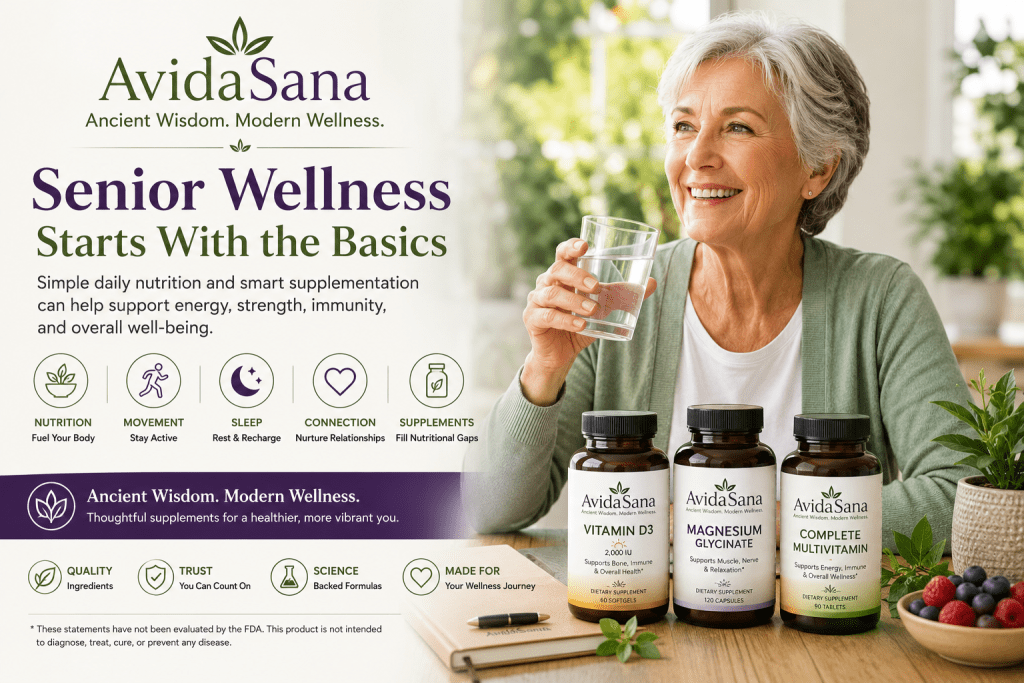
That is the philosophy behind AvidaSana: Ancient Wisdom. Modern Wellness.
Not miracle promises. Not magic pills. Not “take this capsule and suddenly you’re dancing salsa on a cruise ship at midnight.” Though frankly, if that happens, please invite us.
AvidaSana is about supporting the body with practical wellness tools that fit real life.
Why Nutrition Becomes More Important With Age
As we age, our bodies change.
Appetite may decline. Digestion may change. Medications can affect nutrient absorption. People may cook less, eat smaller meals, or rely more on convenience foods. Dental issues, budget concerns, mobility problems, and loneliness can also affect eating habits.
The National Institute on Aging explains that older adults should talk with healthcare professionals before taking supplements, especially because supplements can interact with medications or affect medical conditions. It also notes that some people may need more of certain nutrients as they age.
That is important because supplements are not meant to replace food.
Food is still the foundation.
Supplements are exactly what the word says: support. They may help supplement a healthy lifestyle, but they do not replace meals, sleep, movement, or common sense.
And common sense is underrated. It does not come in a fancy bottle, but it should.
The Problem With the “One Magic Solution” Mindset
The wellness industry loves big promises.
Lose weight overnight.
Reverse aging instantly.
Detox your entire body before breakfast.
The problem is that the body does not work like a toaster oven. You cannot just press one button and expect everything to come out golden brown.
Healthy aging is more like tending a garden. You water it. You feed it. You remove the weeds. You give it sunlight. And occasionally, you wonder why one plant is thriving while the other looks like it has hired a lawyer.
The same is true for the human body.
There is no single habit that does everything. But small daily actions can add up.
A better wellness approach asks:
Am I getting enough protein?
Am I drinking enough water?
Am I moving every day?
Am I sleeping well?
Am I getting enough key vitamins and minerals?
Am I supporting my gut, brain, bones, muscles, and energy?
That is where the conversation becomes practical.

Vitamin D: The Sunshine Nutrient Many Seniors Watch Closely
Vitamin D plays an important role in calcium absorption, bone health, muscle function, immune function, and other normal body processes. The NIH Office of Dietary Supplements notes that vitamin D helps maintain adequate calcium and phosphate levels needed for bone mineralization.
Many older adults pay attention to vitamin D because they may spend less time outdoors, use sunscreen, live in areas with limited sunlight, or have changes in how their bodies process nutrients.
But more is not always better.
Too much vitamin D from supplements can be harmful. That is why seniors should not guess blindly. A healthcare provider can order bloodwork and help determine whether supplementation is appropriate.
That may not sound exciting, but neither does taking too much of something because the internet said it was “natural.” Arsenic is natural too. That does not make it a smoothie ingredient.
Magnesium: A Mineral With Many Jobs
Magnesium is involved in many body functions, including muscle and nerve function, blood glucose regulation, blood pressure regulation, and energy production. The NIH Office of Dietary Supplements provides detailed information on magnesium’s role in normal body function and cautions that supplements can interact with some medications.
Many people do not think about minerals until something goes wrong. But minerals are like the backstage crew at a theater. You may not see them, but if they stop working, the whole show gets messy.
For seniors, magnesium is often discussed in relation to muscle function, relaxation, and general wellness. But again, it should be used wisely, especially by people with kidney disease or those taking medications.
Protein: The Forgotten Aging Nutrient
When people think about aging, they often think about wrinkles.
But muscle loss is one of the bigger issues.
Muscle helps us stand, walk, climb stairs, carry groceries, maintain balance, and stay independent. After a certain age, protecting muscle becomes a serious wellness priority.
That means protein matters.
Protein is not only for bodybuilders grunting near the dumbbells. It is for grandparents who want to lift a suitcase, get out of a chair, walk confidently, and stay strong.
AvidaSana’s wellness philosophy should always come back to this truth: aging well is not just about living longer. It is about staying capable.
Supplements Should Support, Not Replace, Healthy Living
The FDA allows dietary supplement companies to make certain structure/function claims, such as describing how a nutrient supports normal body structure or function. But supplements cannot legally claim to diagnose, treat, cure, or prevent disease unless approved as drugs.
That distinction matters.
A good supplement brand should not scare people. It should educate them.
AvidaSana should stand for clarity, trust, and responsible wellness.
That means saying:
This may support normal wellness.
This is not a cure.
Talk to your doctor if you take medications.
Read labels.
Use supplements as part of a larger healthy lifestyle.
That kind of honesty builds trust. And trust is worth more than flashy claims.
The AvidaSana Approach: Ancient Wisdom, Modern Wellness
The phrase Ancient Wisdom. Modern Wellness. works because it connects two things seniors understand.
Ancient wisdom reminds us that health has always depended on balance, food, movement, rest, and daily discipline.
Modern wellness reminds us that today we have better research, better testing, better manufacturing, and better ways to understand the body.
The best approach is not old versus new.
It is old and new working together.
A walk after dinner.
A protein-rich meal.
A good night’s sleep.
A quiet moment of gratitude.
A high-quality supplement when needed.
That is not complicated. But it is powerful.

A Simple Daily Wellness Checklist
Here is a practical checklist seniors can use:
Drink water early in the day.
Eat protein with meals.
Get some daily movement.
Spend a little time outdoors when possible.
Prioritize sleep.
Stay socially connected.
Review medications and supplements with a healthcare provider.
Avoid chasing miracle claims.
Choose quality over hype.
Give your body steady support.
This is not glamorous advice. But glamorous advice often disappears by Tuesday. Simple habits stick.
Why Quality Matters in Supplements
Not all supplements are equal.
Quality matters. Ingredient sourcing matters. Manufacturing standards matter. Clear labeling matters. Responsible claims matter.
For seniors, this is especially important because many take prescription medications or manage chronic conditions.
A supplement should not be chosen just because the label looks pretty or because an online ad makes dramatic promises.
Look for transparency. Look for clear purpose. Look for sensible claims. Look for a company that respects the intelligence of its customers.
That is the standard AvidaSana should aim to represent.
Final Thought
Aging well is not about fighting your body.
It is about supporting it.
Your body has carried you through decades of work, family, stress, joy, disappointment, love, and probably a few questionable food choices at county fairs.
It deserves respect.
AvidaSana’s message is simple: support your wellness with daily habits, thoughtful nutrition, and responsible supplementation when appropriate.
Not because aging is a curse.
Because elderhood is a stage of life worth living well.
And if we can do that with a little wisdom, a little science, and maybe a little humor, all the better.

FAQ
Are supplements necessary for seniors?
Not always. Many nutrients should come from food first. However, some seniors may benefit from supplements when diet, absorption, medications, or lifestyle make it harder to get enough of certain nutrients. A healthcare professional can help determine what is appropriate.
Should seniors talk to a doctor before taking supplements?
Yes. This is especially important for seniors who take prescription medications, have kidney disease, heart conditions, diabetes, blood pressure issues, or other medical concerns. Supplements can interact with medications.
Can supplements cure disease?
No. Dietary supplements are not approved to diagnose, treat, cure, or prevent disease unless specifically approved as drugs. They may support normal body functions when used properly.
Why is vitamin D important for older adults?
Vitamin D helps the body absorb calcium and supports bone health, muscle function, immune function, and other normal processes. Some older adults may need to monitor vitamin D levels with their healthcare provider.
Why does protein matter after 60?
Protein helps support muscle maintenance. Muscle is important for strength, balance, mobility, and independence as we age.
What does “Ancient Wisdom. Modern Wellness.” mean?
It means combining time-tested principles like balance, movement, rest, and nourishment with modern research, quality standards, and practical supplement support.
Read Other Blog:- Read Now
