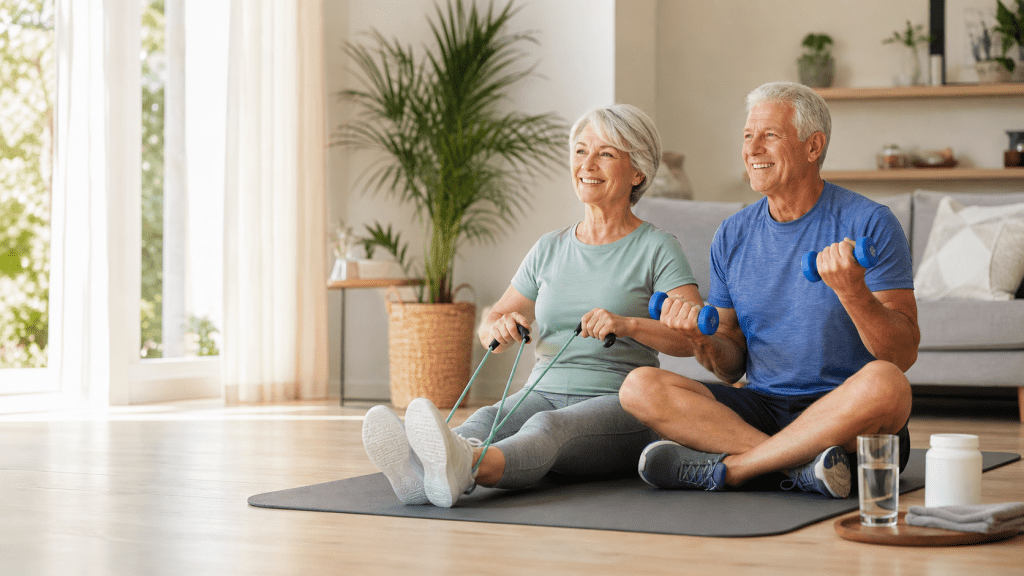
Many seniors are not trying to become athletes.
They are trying to stay capable.
They want to:
Walk with more confidence
Get up from chairs more easily
Carry groceries
Climb stairs
Keep balance
Stay active with family
Travel without feeling helpless
Avoid becoming dependent too soon
That is not bodybuilding.
That is Elderhood.
A review published in Bone reported that creatine supplementation combined with resistance training increased lean mass and muscle strength in aging adults.
That combination is the key.
Creatine plus movement.
Nutrition plus consistency.
Support plus effort.
In other words, the boring stuff still wins. But now we have better tools.
The Brain Energy Question
Creatine is also being studied for possible effects beyond muscle, including brain energy and cognition.
A systematic review on creatine and cognition in aging concluded that current limited evidence suggests creatine may be associated with cognitive benefits in generally healthy older adults. However, the evidence is still limited and more research is needed.
That is the honest way to say it.
Promising? Yes.
Proven as a miracle brain supplement? No.
And that distinction matters.
At AvidaSana, we do not need wild claims. Seniors have been sold enough miracle nonsense already. The better message is simple:
Modern science is exploring how nutrients, movement, sleep, and daily habits may support healthier aging.
That is enough.
We can be excited without becoming foolish.
Why Resistance Training Matters
Here is the part nobody can escape:
You have to use your muscles.
A supplement can support the process, but your body still needs a signal.
That signal is movement.
Resistance training does not have to mean joining a gym full of people grunting into mirrors.
It can be simple:
Chair squats
Wall push-ups
Light dumbbells
Resistance bands
Carrying groceries safely
Standing up from a chair several times
Walking uphill
Practicing balance
Working with a trainer or physical therapist
The point is to challenge the muscles safely and consistently.
The body responds to what we ask of it. If we ask nothing, it gives us less. If we ask wisely, it may give us more than we expected.
That is not just fitness advice. That is a life philosophy.

Protein Still Matters
Creatine gets attention, but it does not replace protein.
Older adults need enough protein to help maintain muscle. Many seniors eat too little protein, especially if appetite decreases, digestion changes, or meals become smaller.
A strong aging routine should include:
Protein-rich meals
Hydration
Strength movement
Good sleep
Daily walking
Nutrient support when appropriate
Consistency
That last word is the monster.
Consistency.
Everybody wants the exciting secret. But most of the time, the secret is doing the simple thing long enough for it to matter.
The AvidaSana Approach to Strength and Aging
AvidaSana is built around a simple belief:
Healthy aging should be practical, respectful, and rooted in both wisdom and science.
We do not believe aging means giving up.
We do not believe seniors should be treated like they are already fading.
We do not believe wellness should be confusing, frightening, or full of hype.
We believe in supporting the body with better habits, better food choices, better movement, and carefully chosen supplements when they make sense.
That is why a product like Brain & Body Creatine fits the AvidaSana philosophy.
Not because it promises miracles.
Because it supports a modern wellness conversation seniors need to hear:
Your muscles still matter.
Your energy still matters.
Your movement still matters.
Your independence still matters.
And your future is still worth protecting.
Who Should Be Careful?
This is important.
Before taking any supplement, especially if you are over 60, speak with your healthcare provider.
That is especially true if you have:
Kidney disease
Liver disease
Diabetes
Heart disease
High blood pressure
A complex medication list
A history of dehydration
Any serious medical condition
Creatine is widely studied, but personal health matters. What is appropriate for one person may not be appropriate for another.
This is not weakness. This is wisdom.
At 25, people do dumb things and call it confidence.
At 75, we ask better questions and call it survival.

A Simple Strength Routine for Elderhood
Here is a simple framework seniors can discuss with their doctor or fitness professional:
1. Move daily
Walking is still one of the best habits. It supports circulation, mood, mobility, and general health.
2. Add gentle resistance training
Start small. Resistance bands, light weights, or chair exercises can be enough at the beginning.
3. Eat enough protein
Do not live on toast, coffee, and hope. Your muscles need building blocks.
4. Stay hydrated
Creatine pulls water into muscle tissue, so hydration matters.
5. Sleep well
Muscle recovery and brain health both depend on quality rest.
6. Be consistent
A little bit done regularly beats a heroic effort followed by three weeks of complaining.
Healthy Aging Is Not About Chasing Youth
Let’s be clear.
The goal is not to become 30 again.
That ship sailed, and frankly, some of us would not want to repeat the nonsense anyway.
The goal is better.
The goal is to become strong enough for the life you still want to live.
Strong enough to travel.
Strong enough to dance.
Strong enough to get on the floor with grandchildren and still get back up.
Strong enough to walk into a room with confidence.
Strong enough to remain independent as long as possible.
That is the real promise of healthy aging.
Not pretending time has not passed.
But refusing to let time take more than it has to.
The Bottom Line
Healthy aging is not just about avoiding illness.
It is about building capacity.
Muscle is capacity.
Movement is capacity.
Energy is capacity.
Confidence is capacity.
Creatine is one tool being studied and used in the modern wellness world to support muscle performance, especially when combined with resistance training and balanced nutrition.
It is not magic.
But it may be useful.
And sometimes, useful is exactly what we need.
In Elderhood, strength is not about vanity.
Strength is about freedom.
And freedom is worth protecting.

FAQ
Is creatine only for bodybuilders?
No. Creatine is often associated with athletes, but it is also being studied for healthy aging, muscle support, and possible cognitive benefits in older adults.
Can creatine help seniors build muscle?
Creatine alone does not build muscle by itself. Research suggests it may be most useful when combined with resistance training and a balanced diet. Harvard Health notes that creatine supplementation along with regular resistance training and a balanced diet may help offset age-related sarcopenia.
Is creatine safe for older adults?
Research reviews have reported that creatine supplementation is generally safe and well-tolerated when used appropriately in healthy individuals, including older adults. However, seniors should speak with their healthcare provider before starting any supplement.
Does creatine improve brain health?
Creatine is being studied for cognition and brain energy. Current evidence is promising but limited, so it should not be presented as a guaranteed brain-health solution.
Do I still need exercise if I take creatine?
Yes. Creatine is not a replacement for movement. Resistance training, walking, protein, hydration, and consistency are still essential.
Should I talk to my doctor before taking creatine?
Yes. This is especially important if you have kidney disease, liver disease, diabetes, heart disease, or take multiple medications.
Read Other Blog:- Read Now
