Walk into almost any health food store today and you will see something that would have seemed unusual twenty years ago:
Mushrooms everywhere.
Not just mushrooms for dinner.
Mushroom powders.
Mushroom coffees.
Mushroom capsules.
Mushroom extracts.
And increasingly, mushroom blends designed to combine several different species into one daily supplement.
So what is going on?
Why have functional mushrooms suddenly become such a major part of the wellness conversation?
The answer is actually thousands of years old.
Certain mushrooms have long been used in traditional Asian health practices, but modern researchers are now studying their naturally occurring compounds, including beta glucans, polysaccharides, triterpenes, and other bioactive substances.
That does not mean mushrooms are miracle cures.
They are not.
But it does mean they have become an interesting area of nutrition and wellness research.
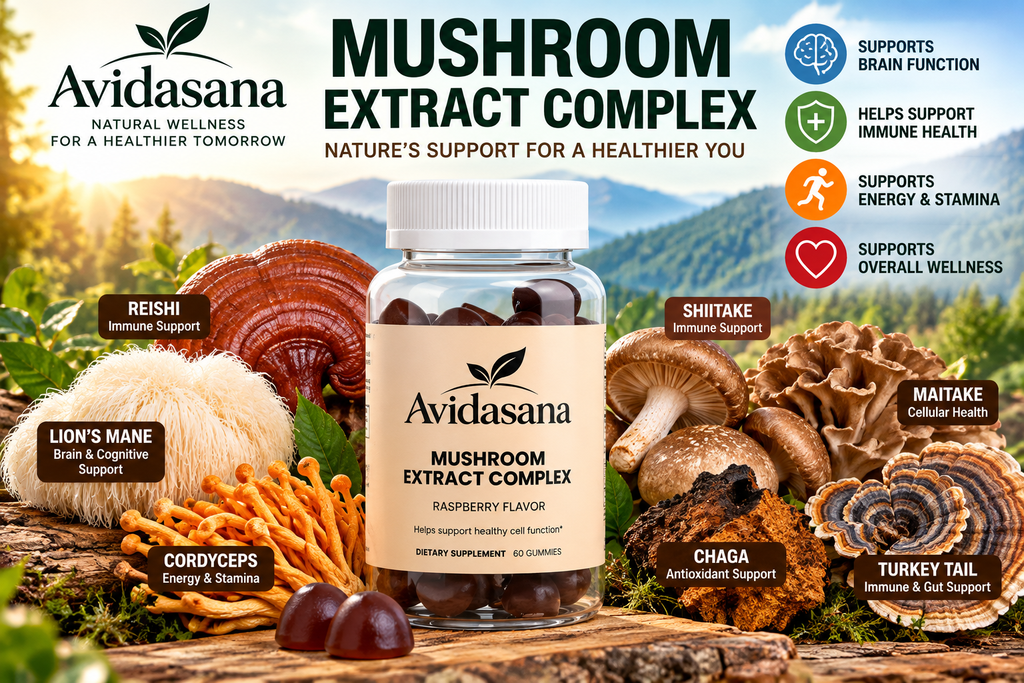
Products such as the A Vida Sana Mushroom Extract Complex are part of this growing interest in functional mushrooms as a convenient addition to a broader healthy lifestyle.
What Are Functional Mushrooms?
Most people think of mushrooms as food.
Button mushrooms on pizza.
Portobello mushrooms on the grill.
Shiitake mushrooms in a stir fry.
Functional mushrooms are somewhat different.
The term generally refers to mushrooms that are used not only as foods but also because they contain compounds being investigated for potential health related properties.
Some of the best known include:
Lion’s mane.
Reishi.
Cordyceps.
Shiitake.
Maitake.
Turkey tail.
Chaga.
These mushrooms have different nutritional and chemical profiles, which is one reason multi mushroom supplements have become popular.
Instead of focusing on a single species, a mushroom complex combines several varieties.
The idea is similar to eating a varied diet.
Different foods provide different nutrients.
Different mushrooms contain different naturally occurring compounds.
Why Mushroom Extracts Instead of Just Eating Mushrooms?
That is a fair question.
After all, why not simply eat mushrooms?
And you should.
Edible mushrooms can be part of an excellent diet.
They can provide fiber, minerals, vitamins, and other nutrients while remaining relatively low in calories.
But extracts are designed for a different purpose.
Mushroom cell walls contain a substance called chitin.
Humans do not digest chitin particularly well.
Extraction processes can help concentrate and make certain mushroom compounds more accessible.
That is one reason supplements often use mushroom extracts rather than simply grinding dried mushrooms into powder.
Still, different products can vary considerably.
The species used matters.
The part of the mushroom used matters.
The extraction method matters.
And the quantity matters.
That is why consumers should look beyond the word “mushroom” on the front of a bottle and pay attention to what is actually inside.
Lion’s Mane and the Brain
Lion’s mane may be the mushroom receiving the most public attention today.
Its scientific name is Hericium erinaceus.
Researchers have been studying compounds in lion’s mane called hericenones and erinacines because of their possible relationship to nerve growth and neurological function.
A recent systematic review examining human and laboratory research found promising areas of investigation involving cognition, mood, gut health, and nerve related mechanisms.
But there is an important reality check.
Human research is still relatively limited.
The review noted that many studies were small, short in duration, or performed in laboratory settings rather than in large human populations.
That means lion’s mane should not be described as a treatment for dementia, Alzheimer’s disease, depression, or other medical conditions.
The science simply is not there yet.
What we can say is that lion’s mane has become a legitimate subject of scientific research, particularly in the areas of cognition and neurological health.
That makes it one of the more interesting functional mushrooms to watch.
Reishi: The Traditional Mushroom With Modern Interest
Reishi has been used in traditional Asian medicine for centuries.
Its scientific name is Ganoderma lucidum.
It contains naturally occurring compounds including polysaccharides and triterpenes.
Modern research has examined reishi for a number of possible effects involving immune activity and other biological pathways.
But here again, caution is important.
The difference between promising biological activity and a proven health outcome can be enormous.
A substance may show an interesting effect in a laboratory dish and still fail to produce a meaningful effect in humans.
That is one reason responsible supplement use should avoid miracle language.
Reishi may be interesting.
It is not magical.
And it certainly should not replace appropriate medical treatment.
Cordyceps and Energy Research
Cordyceps may have the strangest origin story of the group.
Traditional cordyceps refers to a fungus that naturally grows on insects in high altitude regions of Asia.
Fortunately, nobody needs to go hunting caterpillars in the Himalayas anymore.
Most modern cordyceps supplements use cultivated forms.
Cordyceps has attracted interest among athletes and active adults because researchers have investigated its potential effects on energy metabolism, oxygen utilization, endurance, and fatigue.
A recent systematic review and meta analysis examined fungal supplementation in athletes, including cordyceps, and found enough scientific interest to warrant continued research.
However, results across studies are not uniform.
Supplement forms differ.
Doses differ.
Participants differ.
And study quality differs.
That means cordyceps should be viewed as an interesting wellness ingredient rather than a guaranteed performance enhancer.
Shiitake and Maitake: Familiar Foods With Interesting Compounds
Shiitake mushrooms are already familiar to many people because they are widely used in cooking.
Maitake mushrooms are also popular in Japanese cuisine.
Both contain beta glucans.
Beta glucans are types of soluble fiber and polysaccharides found in various foods, including oats, barley, yeast, and mushrooms.
Scientists have studied mushroom beta glucans for their potential interactions with immune system pathways.
This does not mean eating or supplementing with mushrooms will “boost” your immune system in some unlimited way.
In fact, the immune system is far too complicated for that kind of language.
A better phrase is immune support.
The goal should not be to make the immune system stronger at all costs.
The goal is healthy immune function.
Turkey Tail and Chaga
Turkey tail gets its name because the mushroom resembles the colorful tail feathers of a turkey.
It contains polysaccharides that have attracted significant scientific interest.
Certain highly purified mushroom derived compounds have even been studied alongside conventional medical treatments in some countries.
That does not mean an over the counter turkey tail supplement should be considered a cancer treatment.
It absolutely should not.
That distinction is extremely important.
Chaga has also become popular, particularly in mushroom teas and coffee alternatives.
It contains antioxidant compounds and other naturally occurring substances that researchers continue to investigate.
Again, much of the research remains preliminary.
Natural does not automatically mean proven.
Why Combine Several Mushrooms?
This is where a mushroom complex becomes interesting.
Instead of asking one mushroom to do everything, a blend may contain several species with different natural compounds.
You can think of it somewhat like a diversified portfolio.
You would not necessarily want your entire diet to depend on one vegetable.
Likewise, some supplement users prefer a broader combination of functional mushrooms rather than focusing on just one.
The A Vida Sana Mushroom Extract Complex provides a convenient way to incorporate mushroom extracts into a daily wellness routine.
The important word there is routine.
No supplement compensates for poor fundamentals.
If you sleep four hours a night, rarely move, eat poorly, smoke, drink excessively, and live under constant stress, a mushroom capsule is not going to ride in wearing a cape and save the day.
Health does not work that way.
Supplements Work Best as Part of a Bigger Picture
A sensible wellness program still comes back to the basics.
Eat predominantly whole foods.
Include vegetables and fruit.
Get sufficient protein.
Stay physically active.
Maintain muscle.
Sleep consistently.
Manage stress.
Maintain social connections.
Limit smoking and excessive alcohol.
And work with your healthcare professional when medical conditions are involved.
Supplements belong on top of those foundations.
They do not replace them.
That is one of the most important principles in the entire supplement industry.
More Is Not Always Better
There is a persistent belief in nutrition that if a little is good, more must be better.
That can get people into trouble.
Mushroom supplements contain biologically active compounds.
They may also interact with medications or certain medical conditions.
The National Center for Complementary and Integrative Health warns that dietary supplements and botanical products can interact with prescription medications and that these interactions are sometimes difficult to predict.
That is particularly important for people who take:
Blood thinners.
Immunosuppressive medications.
Cancer treatments.
Medications with narrow therapeutic ranges.
Or multiple prescription medications.
People who are pregnant, breastfeeding, preparing for surgery, or managing significant medical conditions should also speak with their healthcare professional before beginning a new supplement.
Natural does not mean inactive.
And inactive substances do not require research.
The very reason functional mushrooms are interesting is that they contain active compounds.
What About Side Effects?
Many people tolerate mushroom products without difficulty.
But side effects can occur.
Depending on the mushroom and individual response, reported effects can include digestive discomfort, nausea, diarrhea, headache, rash, or allergic reaction.
Cordyceps, for example, is generally well tolerated in research, although mild gastrointestinal symptoms and rash have been reported.
Lion’s mane research has also reported occasional stomach discomfort, headache, and allergic reactions.
Anyone who experiences a significant reaction should stop using the product and consult an appropriate healthcare professional.
Quality Matters
Perhaps the most overlooked part of shopping for mushroom supplements is quality.
A mushroom label can sound impressive while telling you very little.
Consumers should look for clear information about:
The mushroom species.
The amount per serving.
Whether extracts are used.
The portion of the mushroom used.
Manufacturing standards.
Ingredient transparency.
And recommended use.
Mushroom supplements are not all identical.
Neither are the mushrooms themselves.
That is another reason comparison matters.
The Bottom Line on Mushroom Extract Complexes
Functional mushrooms are not new.
Human beings have used them for centuries.
What is new is the growing scientific effort to understand why certain mushrooms contain compounds that appear biologically interesting.
Lion’s mane is being studied for cognitive and neurological effects.
Reishi remains an area of interest for immune related pathways.
Cordyceps has attracted attention for energy and exercise research.
Shiitake, maitake, turkey tail, and chaga contain their own distinctive compounds.
The science is developing.
Some findings are encouraging.
Others remain preliminary.
That is exactly how good science works.
We ask questions.
We test.
We learn.
We discover that some ideas hold up and others do not.
A functional mushroom supplement should therefore be viewed for what it is:
One possible addition to a thoughtful wellness routine.
Not a cure.
Not a replacement for medication.
Not a shortcut around exercise, nutrition, or sleep.
And certainly not magic.
If you are interested in incorporating a blend of functional mushrooms into your wellness routine, you can learn more about the A Vida Sana Mushroom Extract Complex here.
At A Vida Sana, the larger goal is simple:
Support better everyday habits, keep learning about your health, and build wellness one decision at a time.
This article is for educational purposes only and is not medical advice. Dietary supplements are not intended to diagnose, treat, cure, or prevent disease. If you take prescription medications, have a medical condition, are pregnant or breastfeeding, or are preparing for surgery, consult your healthcare professional before starting a new dietary supplement.
