Resveratrol has become one of those supplement ingredients that seems to be everywhere.
You hear about it in conversations about healthy aging.
You hear about it in discussions about red wine.
You hear about antioxidants, heart health, metabolism, inflammation, and longevity.
And somewhere along the way, resveratrol developed a reputation as a kind of “youth molecule.”
That sounds impressive.
Maybe a little too impressive.
So what is resveratrol really?
What does the research actually show?
And if you are considering adding it to your daily wellness routine, what should you know first?
Let’s separate the interesting science from the marketing noise.
What Is Resveratrol?
Resveratrol is a naturally occurring plant compound known as a polyphenol.
Plants produce it partly as a defense mechanism when they are under stress.
It is found naturally in foods including:
- Red grapes
- Grape skins
- Some berries
- Peanuts
- Red wine
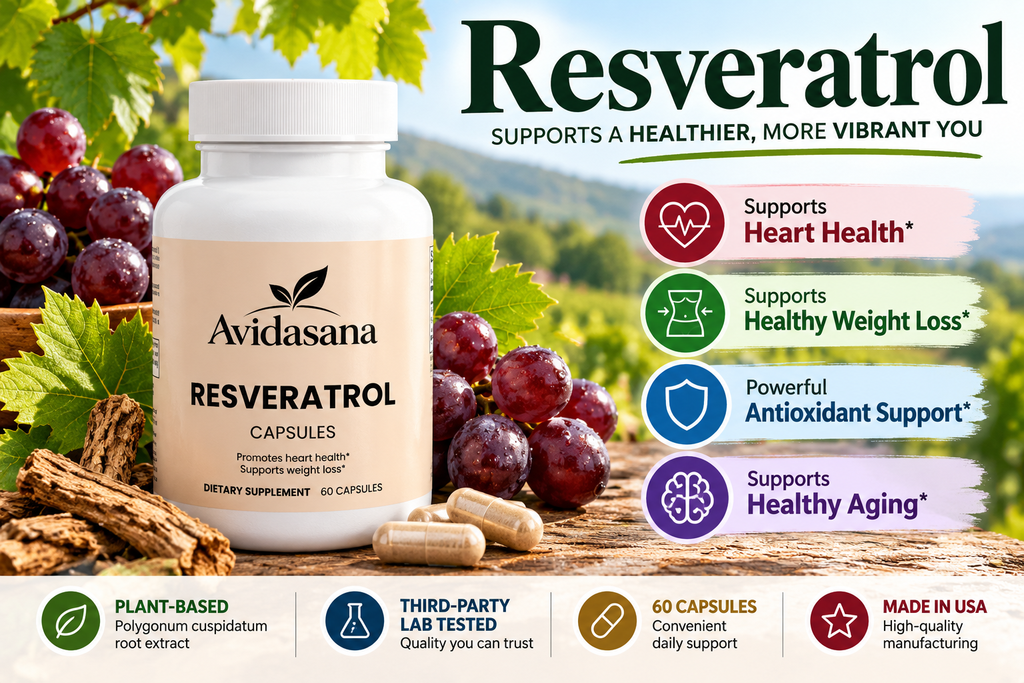
The A Vida Sana Resveratrol formula uses a resveratrol complex derived from Polygonum cuspidatum root, also known as Japanese knotweed, containing 50% trans-resveratrol. The product comes in 60 vegetable capsules and is manufactured in the United States.
Trans-resveratrol is one of the forms of resveratrol most commonly studied in scientific research.
That does not automatically mean that every supplement produces the same effects seen in research studies.
Dosage, formulation, purity, absorption, study population, and duration all matter.
That is an important distinction.
Why Has Resveratrol Become So Popular?
Much of the excitement around resveratrol comes from laboratory and animal research showing that it can affect biological pathways associated with oxidative stress, inflammation, metabolism, and cellular signaling.
One area that generated enormous attention involves proteins called sirtuins, particularly SIRT1.
These proteins participate in processes related to cellular metabolism and stress responses.
Because of that connection, resveratrol became associated in popular culture with healthy aging and longevity research.
But the human evidence is more complicated.
A 2025 systematic review and meta-analysis of randomized trials found that resveratrol supplementation did not significantly increase measured SIRT1 gene expression, protein expression, or blood levels in the included studies.
In other words:
Interesting biology does not always translate neatly into dramatic benefits in people.
That is one of the most important lessons in nutrition science.
Antioxidants and Oxidative Stress
Resveratrol is often described as an antioxidant.
What does that actually mean?
Our bodies constantly produce unstable molecules known as free radicals as part of normal metabolism.
Free radicals are not automatically bad.
They participate in normal biological processes.
But when free radical activity becomes excessive relative to the body’s antioxidant defenses, the result is often described as oxidative stress.
Oxidative stress has been studied in connection with aging and a wide range of chronic health conditions.
Plant compounds such as resveratrol have attracted interest because of their antioxidant and anti-inflammatory properties.
That is one reason fruits, vegetables, berries, and other plant foods continue to be such an important part of healthy eating patterns.
Supplements attempt to concentrate particular compounds found in those foods.
But a supplement should not be viewed as a substitute for the foods themselves.
What Does Human Research Show?
This is where things get interesting.
Resveratrol has been studied extensively.
A major systematic review published in 2024 examined almost 200 clinical studies involving resveratrol across at least 24 health conditions.
Researchers found signals of potential benefit in areas such as inflammation and metabolic health.
However, they also concluded that there is still not enough conclusive clinical evidence to recommend resveratrol as a treatment for any particular medical condition.
That distinction matters.
There is a difference between:
“Research suggests something may be useful.”
and
“This has been proven to treat disease.”
Resveratrol remains firmly in the first category.
Resveratrol and Metabolic Health
One of the more actively studied areas involves metabolic health.
That includes factors such as:
- Blood glucose
- Blood pressure
- Insulin sensitivity
- Body composition
- Cholesterol
- Inflammation
A recent umbrella review published in 2026 examined 45 systematic reviews covering 68 health outcomes.
It found some higher-certainty evidence suggesting resveratrol supplementation may reduce waist circumference and may improve blood pressure in people with type 2 diabetes, as well as total cholesterol in overweight adults.
The same review also found moderate-certainty evidence suggesting possible benefits in areas such as glucose metabolism, endothelial function, inflammation, working memory, liver fat, and kidney-related measures.
That sounds promising.
But there is another important point.
Benefits were not universal.
They varied by population, dose, health condition, and study design.
This is why a supplement should never be described as though it produces the same result in everyone.
What About Blood Sugar?
Resveratrol has received particular attention among researchers studying type 2 diabetes.
The National Center for Complementary and Integrative Health notes that several analyses have found resveratrol may reduce fasting blood glucose and blood pressure in people with type 2 diabetes.
However, results for other measures, including HbA1c and insulin resistance, have been inconsistent or uncertain.
That means resveratrol should not be considered a substitute for diabetes medication, dietary changes, exercise, weight management, or medical care.
If you take medication for blood sugar control, talk with your healthcare professional before adding a supplement.
Resveratrol and Heart Health
Cardiovascular health is another major reason people become interested in resveratrol.
The idea makes sense biologically.
Researchers have investigated resveratrol’s effects on:
- Blood pressure
- Endothelial function
- Inflammatory markers
- Cholesterol
- Blood vessels
Some studies and meta-analyses have reported improvements in certain cardiovascular risk markers.
But the results vary.
We do not have evidence that taking resveratrol guarantees protection against heart attack or stroke.
That would be an inappropriate claim.
The more responsible view is this:
Resveratrol is an interesting compound being studied for its potential effects on several markers associated with cardiovascular and metabolic health.
That is worth studying.
It is not the same thing as proven disease prevention.
What About Brain Health?
Another exciting area of research involves cognition.
Resveratrol has been investigated for possible effects on:
- Memory
- Cerebral blood flow
- Neuroinflammation
- Age-related cognitive change
Some research has suggested possible benefits in selected populations, and the recent umbrella review found moderate-certainty evidence suggesting potential improvement in working memory.
Again, the key word is potential.
There is currently no good evidence that resveratrol prevents dementia or Alzheimer’s disease.
Anyone promising that is getting ahead of the science.
For brain health, the fundamentals still matter enormously:
Regular exercise.
Adequate sleep.
Blood pressure control.
Social engagement.
A nutrient-rich diet.
Avoiding tobacco.
Managing diabetes.
Continuing to challenge the brain.
A capsule should be viewed as an addition to healthy habits, not a replacement for them.
The Red Wine Question
Resveratrol became famous partly because it is found in red wine.
That led to endless headlines suggesting red wine might somehow be a health drink.
That conclusion needs caution.
The amount of resveratrol in wine is relatively small compared with amounts often used in supplement studies.
And alcohol carries its own health risks.
So drinking more red wine is not a sensible strategy for increasing resveratrol intake.
If you enjoy grapes and berries, wonderful.
They come packaged with fiber, vitamins, minerals, and many other beneficial plant compounds.
No wine glass required.
How Much Resveratrol Should You Take?
There is no universally established therapeutic dose of resveratrol for preventing or treating disease.
Clinical studies have used a very wide range of doses.
The NCBI LiverTox database notes that human studies have used doses ranging from about 20 mg to several grams per day.
That does not mean higher is better.
In fact, more is often not better with supplements.
The A Vida Sana Resveratrol label recommends taking one vegetable capsule twice daily, preferably 20 to 30 minutes before a meal, or as directed by a healthcare professional.
Follow the product directions unless your healthcare professional recommends otherwise.
Is Resveratrol Safe?
Resveratrol has generally been well tolerated in human studies.
The large systematic review of clinical trials reported an overall favorable safety profile, although not every trial reported adverse events consistently.
Possible side effects may include:
- Digestive upset
- Nausea
- Headache
- Fatigue
Higher doses may be more likely to cause gastrointestinal problems.
There may also be interactions with medications.
The National Center for Complementary and Integrative Health specifically notes potential interactions with anticoagulant and antiplatelet drugs.
That matters particularly for people taking medications such as blood thinners or drugs that affect platelet function.
If you are taking prescription medication, have a medical condition, are pregnant or nursing, or are preparing for surgery, speak with your healthcare professional before using resveratrol or any new supplement.
That is not unnecessary caution.
It is simply smart supplement use.
Supplement Quality Matters
Another important issue is quality.
Supplements sold online or in stores are not always identical to products used in research studies.
The National Center for Complementary and Integrative Health notes that commercial dietary supplements may differ significantly from formulations tested in clinical research.
That is why transparency matters.
The A Vida Sana Resveratrol product page provides a Certificate of Analysis, and the product is described as independently third-party laboratory verified.
When evaluating any supplement, look for:
- Ingredient transparency
- Clear serving directions
- Third-party testing
- Manufacturing information
- Appropriate warnings
A supplement label should tell you what you are taking.
Mystery ingredients are not a wellness strategy.
Where Resveratrol Fits Into a Healthy Lifestyle
Perhaps the biggest mistake in the supplement world is expecting one ingredient to do all the work.
Healthy aging does not come from one capsule.
It comes from patterns.
Regular movement.
Adequate protein.
Fruits and vegetables.
Good sleep.
Stress management.
Maintaining muscle.
Staying socially connected.
Managing blood pressure and metabolic health.
And using supplements intelligently when they fit your individual goals.
Resveratrol can be one part of that picture.
It should never become the whole picture.
Explore more wellness information and nutritional products at A Vida Sana.
You can also visit the A Vida Sana blog for more discussions about nutrition, supplements, healthy aging, and practical wellness.
And if you would like to learn more about this specific product, see A Vida Sana Resveratrol.
The Bottom Line
Resveratrol is one of the more interesting plant compounds being studied in modern nutrition science.
It occurs naturally in grapes, berries, peanuts, and several plants.
Research has explored its possible effects on inflammation, metabolism, blood pressure, blood glucose, cognition, vascular function, and healthy aging.
Some findings are promising.
Others remain uncertain.
And despite the hype surrounding resveratrol, current evidence does not justify calling it a miracle anti-aging compound or a treatment for disease.
The best way to look at resveratrol is as part of a broader wellness strategy.
Eat well.
Move your body.
Protect your sleep.
Maintain your strength.
Stay engaged with life.
And if supplements fit into that strategy, choose them thoughtfully.
At A Vida Sana, the goal is not to chase miracles.
It is to help support healthier daily choices—one habit at a time.
Live healthier. Stay curious. Keep moving forward.
This article is for educational purposes only and is not medical advice. Dietary supplements are not intended to diagnose, treat, cure, or prevent disease. Speak with your healthcare professional before starting a new supplement, particularly if you take medications or have a medical condition.
