For most of our lives, we think about health in simple terms.
We think about weight, cholesterol, or blood pressure.
But as we enter the later decades of life, something else becomes even more important.
Strength.
Modern researchers studying aging are discovering that muscle strength plays a major role in how well people age.
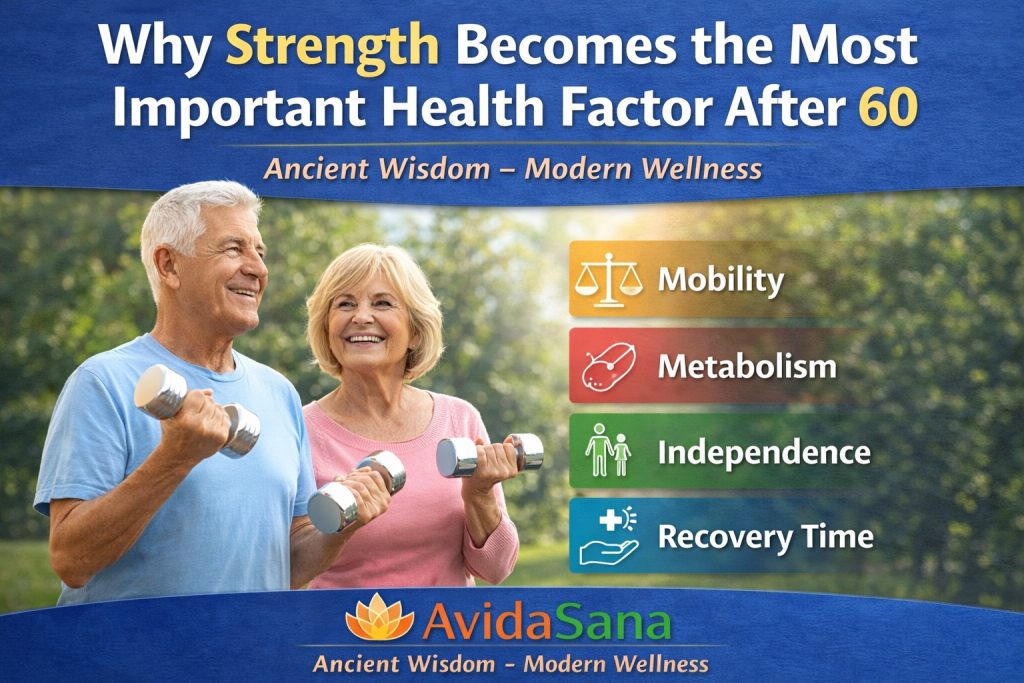
It affects mobility, metabolism, balance, and even long-term independence.
And the good news is something many people never hear.
Strength can be improved at almost any age.
The Hidden Condition Called Sarcopenia
Scientists use the term sarcopenia to describe the gradual loss of muscle mass that occurs with aging.
This process begins earlier than many people realize, often starting in our forties.
Without attention to strength, muscle mass slowly declines over time.
Research shows that sarcopenia can affect:
• Balance and stability
• Metabolism and blood sugar regulation
• Physical independence
• Recovery from illness or injury
This is why many longevity researchers now say muscle is one of the body’s most important organs of aging.
Muscle Is More Than Movement
For decades, muscle was seen mainly as something that helps us move.
Today scientists understand that muscle tissue also acts as a metabolic and hormonal regulator.
Healthy muscle supports:
• Glucose control
• Healthy metabolism
• Circulation
• Anti-inflammatory signaling
In other words, muscle health influences far more than physical strength.
It plays a role in the body’s overall resilience.
The Surprising Ability of the Aging Body
One of the most encouraging discoveries in modern aging research is this:
The body can rebuild muscle far later in life than once believed.
Studies show that even individuals in their seventies and eighties can increase strength through resistance exercise.
The body continues to respond to physical stimulus when given the right support.
This discovery has changed how scientists view aging.
Rather than inevitable decline, many researchers now focus on maintaining biological function for as long as possible.
Nutrition Also Plays a Role
Strength is not only about exercise.
Nutrition helps provide the building blocks the body needs to maintain muscle.
Important factors include:
• Adequate protein intake
• Micronutrients that support energy metabolism
• Compounds that support cellular energy production
Researchers studying aging are also exploring nutrients that may support mitochondrial function and cellular energy systems.
These systems are essential for maintaining strength and vitality over time.
AvidaSana and the Philosophy of Modern Wellness
At AvidaSana, the goal is simple.
Combine ancient wisdom about caring for the body with modern scientific understanding of how the body ages.
Strength, movement, nutrition, and mental clarity all work together.
When these systems support each other, the body remains more capable and resilient.
And that is the true meaning of wellness.
Not chasing youth.
But maintaining vitality as the years unfold.
The Takeaway
Aging does not mean the body stops adapting.
In fact, research increasingly shows that the body retains remarkable capacity for renewal.
Strength training, proper nutrition, and attention to metabolic health can help preserve independence and vitality.
The message modern science is beginning to confirm is surprisingly simple.
The body responds when we give it the right conditions.
And it is never too late to begin.
