As we enter Elderhood, many people begin to notice subtle changes in how their mind works.
Maybe a word takes a little longer to come to mind.
Maybe concentration is not quite as sharp as it once was.
These experiences are common, but modern science is beginning to uncover something encouraging.
Researchers are learning that many aspects of brain aging are connected to processes happening deep inside our cells.
One of the most interesting discoveries involves a molecule called NAD+.
What Is NAD+?
NAD+ stands for Nicotinamide Adenine Dinucleotide.
It is a molecule found in every cell of the body and plays a critical role in how cells produce energy.
In simple terms, NAD+ helps cells convert nutrients into the energy they need to function properly.
This is especially important for the brain.
The brain is one of the most energy-demanding organs in the human body. Even though it represents only about two percent of body weight, it uses roughly 20 percent of the body’s energy.
Without adequate cellular energy, brain function can decline.
Why NAD+ Declines With Age
One reason scientists are paying attention to NAD+ is that levels naturally decline as we grow older.
Research suggests NAD+ levels may drop significantly between early adulthood and later life.
Lower NAD+ levels may influence several important biological processes, including:
• cellular energy production
• DNA repair
• mitochondrial function
• cellular resilience to stress
These systems play an important role in maintaining brain function over time.
When scientists began studying these processes, they started asking an important question.
Could supporting NAD+ levels help support healthy aging?
NAD+ and Brain Function
Some research suggests NAD+ is involved in processes related to brain resilience and cognitive performance.
Scientists studying aging and neurobiology are exploring how NAD+ influences:
• mitochondrial health in brain cells
• communication between neurons
• protection against oxidative stress
• cellular repair mechanisms
While research is still evolving, the interest in NAD+ has grown rapidly in the scientific community.
It has become one of the most studied molecules in longevity and aging research.
Nutrients That Support NAD+ Pathways
Because NAD+ itself is difficult to supplement directly, many formulations focus on nutrients that support the body’s natural NAD+ pathways.
Some compounds commonly studied include:
Nicotinamide Riboside (NR)
A precursor that helps the body produce NAD+.
Nicotinamide Mononucleotide (NMN)
Another molecule involved in NAD+ synthesis pathways.
Resveratrol and related polyphenols
Plant compounds that may support cellular signaling pathways linked to longevity.
B vitamins and cellular cofactors
These help support energy metabolism and cellular health.
Together, these ingredients aim to support the body’s natural cellular processes involved in healthy aging.
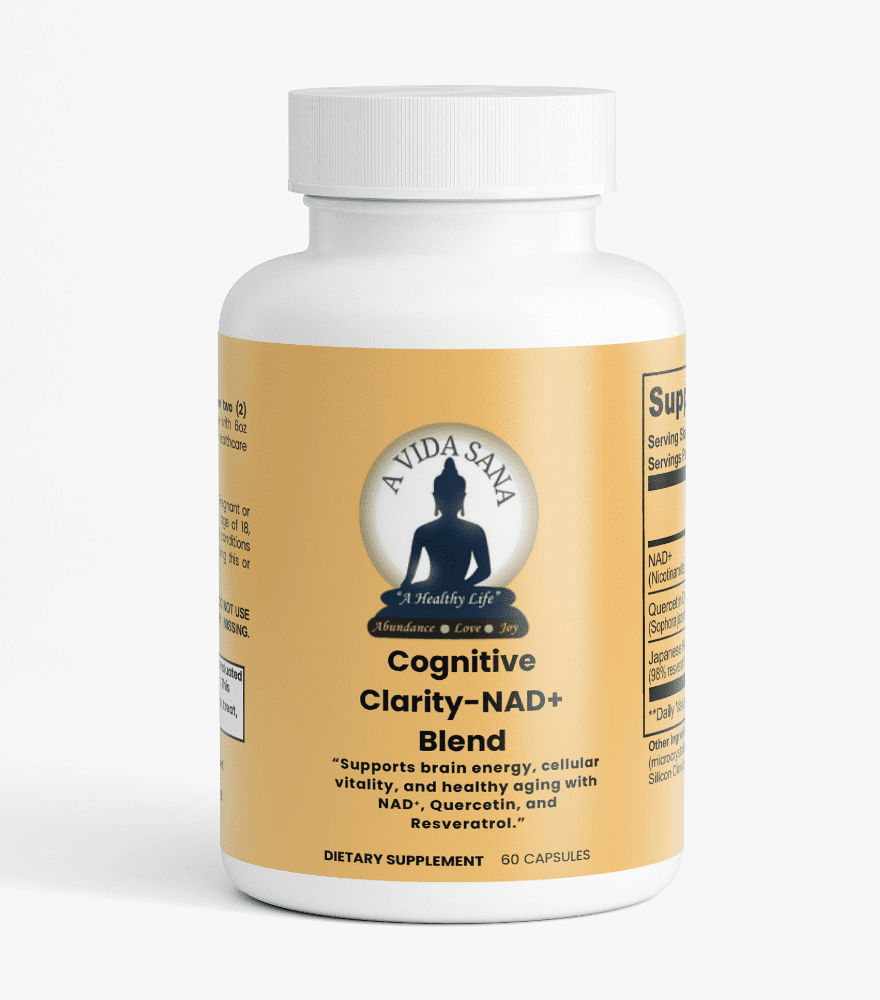
The Idea Behind Cognitive Clarity – NAD+ Blend
The concept behind Cognitive Clarity – NAD+ Blend is simple.
Support the biological systems involved in cellular energy and brain resilience.
Rather than focusing on short-term stimulation, the goal is to support the underlying processes that contribute to cognitive wellness over time.
This approach reflects a broader shift happening in health science.
Instead of only addressing symptoms, researchers are increasingly studying how to support cellular health and longevity mechanisms.
Lifestyle Still Matters Most
Even with promising research, no supplement replaces the foundation of healthy living.
Brain health is strongly influenced by daily habits.
Research consistently points to several important lifestyle factors:
• regular physical activity
• quality sleep
• nutrient-rich foods
• social engagement
• mental stimulation
These habits help maintain blood flow, energy metabolism, and neural activity.
Supplements should always be viewed as supporting tools, not substitutes for healthy living.
A New Era of Brain Health Research
For many years, aging was viewed as an inevitable decline.
Today that perspective is changing.
Scientists are uncovering biological processes that influence how we age and how our brains function over time.
Molecules like NAD+ are becoming an important part of that conversation.
While research continues to evolve, the growing understanding of cellular health is opening the door to new approaches for maintaining cognitive clarity in later life.
Final Thought
Elderhood is not simply about adding years to life.
It is about maintaining the energy, clarity, and independence that allow those years to be enjoyed.
Understanding the science of cellular health is one of the most exciting frontiers in modern aging research.
And for many people, that knowledge brings a hopeful message.
The brain is far more adaptable and resilient than we once believed.
