For decades, creatine was boxed into one narrow category: gym supplement.
Big mistake.
Modern science is uncovering something far more interesting — and far more relevant to those of us in Elderhood.
Creatine is not about biceps.
It’s about cellular energy.
And when you understand what happens to cellular energy after 60, everything starts to make sense.
Fatigue.
Muscle loss.
Slower recovery.
Brain fog.
Reduced resilience.
The question isn’t whether aging happens.
The question is: can we support the energy systems that decline with it?
That’s where creatine enters the conversation.
The Foundation: Energy Is Everything
Every cell in your body runs on ATP (adenosine triphosphate).
ATP is your body’s energy currency.
No ATP — no movement.
No ATP — no muscle contraction.
No ATP — no clear thinking.
No ATP — no healing.
Here’s the problem.
ATP is used up quickly.
Your body has to constantly regenerate it.
Creatine plays a central role in that regeneration process through what’s called the phosphocreatine system — essentially a rapid energy recycling mechanism inside your cells.
Think of creatine as a backup battery system that helps recharge ATP during high demand.
And aging increases demand.
What Happens to Energy in Elderhood?
As we age, several things shift:
• Mitochondrial efficiency declines
• Muscle mass declines (sarcopenia)
• Brain metabolism becomes less efficient
• Recovery slows
• Inflammation increases
These are not moral failures.
They are biological realities.
But here’s something empowering:
Energy metabolism is one of the few aging systems we can influence.
That is not wishful thinking — that’s physiology.
Creatine and Muscle Preservation
Let’s start with what we know best.
Creatine has been studied for decades in relation to muscle strength and performance.
But what’s especially relevant for seniors is this:
Creatine supplementation combined with resistance training has repeatedly been shown to improve muscle strength and lean mass in older adults.
That matters.
Because muscle is not cosmetic.
Muscle is survival.
Muscle predicts:
• Fall risk
• Independence
• Hospital recovery outcomes
• Metabolic health
• Longevity
Sarcopenia — age-related muscle loss — is one of the strongest predictors of frailty.
And resistance training still works. Even in your 70s. Even in your 80s. No matter your age.
Creatine enhances the body’s ability to respond to that training.
Not by magic.
By improving cellular energy availability.
“But I Don’t Lift Weights”
You don’t have to.
Simple bodyweight exercises at home matter:
• Chair squats
• Wall push-ups
• Step-ups
• Light resistance bands
• Slow controlled movements
Creatine is not a substitute for movement.
It supports the body’s response to movement.
And if you respect your body and start slowly, you can improve strength safely.
To be on the safe side, talk to your doctor before beginning any new exercise or supplement routine.
We are adults here. We act responsibly.
The Brain Connection — And This Is Where It Gets Interesting
Your brain uses about 20% of your body’s total energy — despite being only about 2% of your body weight.
It is an energy-hungry organ.
When brain energy metabolism declines, you may notice:
• Mental fatigue
• Slower processing speed
• Reduced short-term memory
• Less cognitive resilience under stress
Emerging research suggests creatine may support:
• Working memory
• Cognitive performance under stress
• Brain energy metabolism
• Neuroprotection mechanisms
This does not mean creatine “cures” anything.
We do not make disease claims.
But supporting brain energy is a rational longevity strategy.
Energy is not trivial.
Energy drives clarity.
Why Seniors May Be More Likely to Benefit
Creatine is found naturally in:
• Red meat
• Fish
• Animal protein
Many seniors:
• Eat less protein
• Reduce red meat
• Have reduced appetite
• Experience lower overall nutrient intake
At the same time, natural creatine synthesis may decline with age.
Lower intake + reduced synthesis + increased need = potential deficit.
This is not about bodybuilding.
It is about restoring balance.
Creatine and Recovery
Another underappreciated factor in aging is recovery.
In younger years, you could push hard and bounce back quickly.
Now?
It takes longer.
Creatine has been shown to support:
• Muscle recovery
• Reduced exercise-induced damage
• Improved functional performance
Recovery is resilience.
And resilience is the difference between thriving and withdrawing.
The ATP Conversation Most People Miss
Here’s what most supplement discussions ignore.
ATP production depends on:
• Mitochondrial function
• Nutrient availability
• Hormonal environment
• Cellular hydration
• Phosphocreatine availability
Creatine does not replace healthy living.
It supports one critical energy pathway.
It is one lever among many.
But it is a powerful lever.
Is Creatine Safe?
Creatine is one of the most studied supplements in the world.
Research spanning decades shows it is generally well tolerated in healthy individuals when used appropriately.
But let’s be mature about this.
If you have:
• Kidney disease
• Serious medical conditions
• Complex medication regimens
You should consult your physician before using creatine.
Hydration matters.
Moderation matters.
More is not better.
Typical maintenance doses are modest.
This is not about megadosing.
It is about intelligent support.
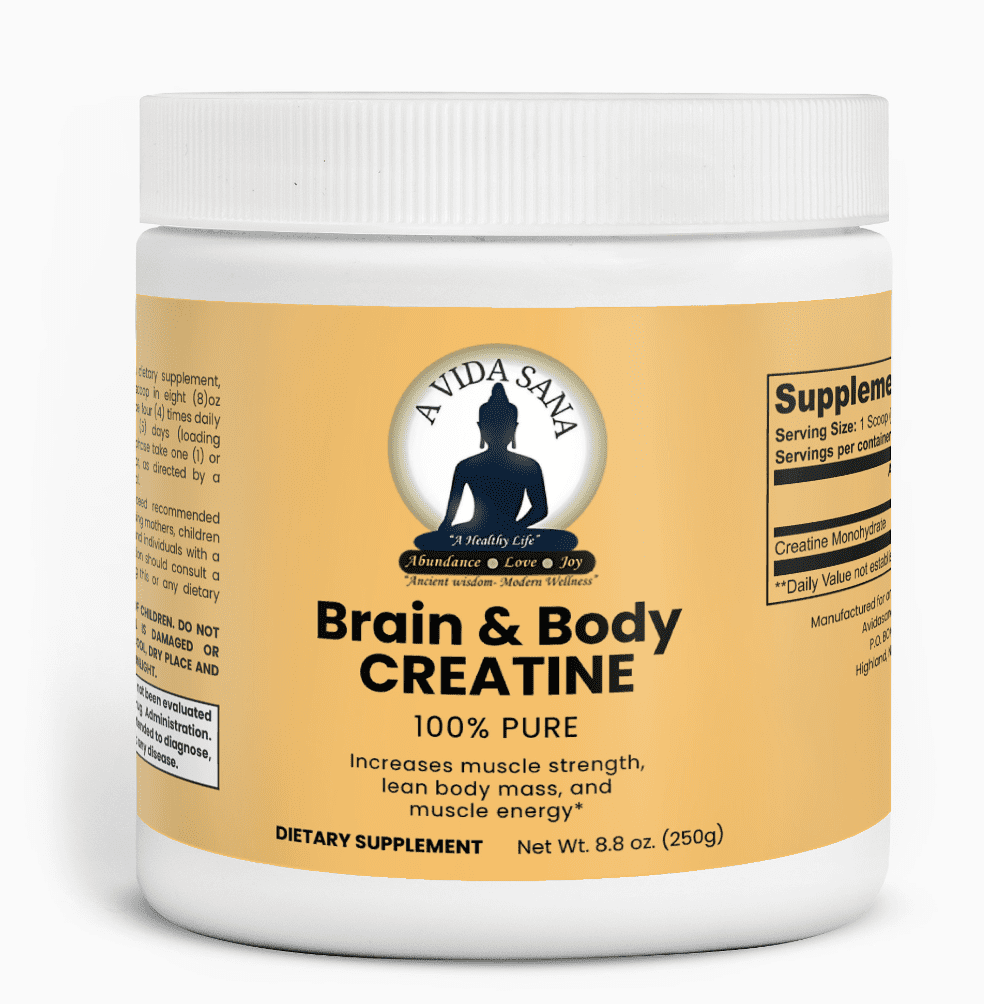
Why We Created Brain & Body Creatine
At AvidaSana, we asked:
Why separate brain support and muscle support when both depend on cellular energy?
Why force seniors to juggle multiple powders and pills when the underlying mechanism overlaps?
That’s why we created:
Brain & Body Creatine
One scoop.
Clean formulation.
No artificial hype.
No exaggerated claims.
Just energy support for the systems that matter most as we age.
Sharp.
Steady.
Strong.
Vibrant Aging Is an Energy Equation
Let’s talk about the bigger philosophy.
Vibrant Aging is not pretending you are 25.
It is preserving function.
Energy drives:
• Movement
• Balance
• Memory
• Mood
• Motivation
• Confidence
When energy drops, life shrinks.
When energy is supported, engagement expands.
This is not cosmetic anti-aging.
This is functional longevity.
Creatine and Long-Term Aging Science
Scientists are increasingly looking at:
• Mitochondrial health
• Cellular bioenergetics
• NAD+ metabolism
• Inflammation regulation
• Muscle-brain interaction
Creatine intersects with energy metabolism at a foundational level.
And foundational systems tend to matter more than flashy ones.
We are the first elders in history to have real data about aging, muscle preservation, and brain energy.
That is a privilege.
Let’s use it.
Who Should Consider Brain & Body Creatine?
Adults in Elderhood who:
• Want to preserve muscle strength
• Are engaging in light resistance training
• Experience mental fatigue
• Eat low amounts of red meat
• Care about long-term resilience
• Believe in science-based supplementation
Who should pause and consult first?
• Those with kidney concerns
• Those with serious medical complexity
• Anyone unsure about interactions
We respect boundaries.
What Creatine Is Not
It is not:
• A steroid
• A stimulant
• A miracle cure
• A replacement for exercise
• A replacement for sleep
• A substitute for real food
It is a molecule your body already uses.
We are simply supporting it.
Practical Use Guidelines
• Take consistently
• Stay hydrated
• Combine with movement
• Give it time
• Monitor how you feel
Supplements are not instant gratification.
They are strategic support.
Final Perspective
Energy is the silent currency of aging.
You can feel when it’s declining.
You can feel when it improves.
Brain & Body Creatine is not about hype.
It is about preserving the energy systems that allow you to:
• Walk confidently
• Think clearly
• Recover properly
• Engage fully
Vibrant Aging is not accidental.
It is intentional.
And supporting cellular energy may be one of the smartest decisions an informed elder can make.
